Game World!

Join A World Of Gamers

Enter your email address:

Delivered by FeedBurner

Followers

Popular Posts

Showing posts with label SFMTA. Show all posts

Thursday, 18 May 2023

Bike to Wherever Day

Bike to Wherever Day
By

Join people across the city bicycling today for the annual Bike to Wherever Day. The SFMTA is proud to be the official citywide sponsor of Bike to Wherever Day 2023, San Francisco's favorite biking celebration!   

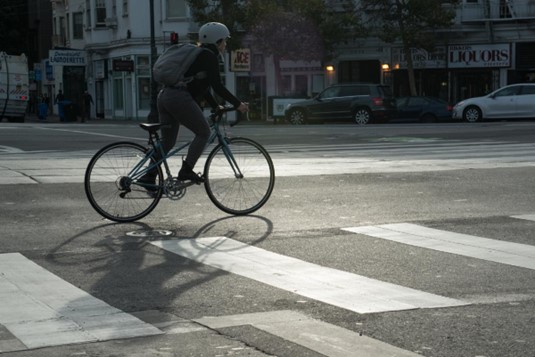
A bicyclist with a backpack and helmet is seen in the street adjacent to a crosswalk.

Hosted by the San Francisco Bicycle Coalition, Bike to Wherever Day celebrates  bicycles as a fun and healthy way to get around. This annual event invites people to pedal to their destinations, and it promotes bicycling both as an alternative commute and as a healthy and safe alternative to driving to…wherever. 

We encourage everyone, including those who don't usually bike, to get out and cycle today. After grabbing some wheels  (your own or a bikeshare bike), consider joining one of the Neighborhood Rides. Need more reason to stop by? You also can pick up your free Bike to Wherever Day canvas tote bag, filled with goodies, courtesy of the SF Bicycle Coalition. 

Resources to Help You Plan Your Bicycle Trip 

The SFMTA has go-to resources to help you plan your bicycle trips.  The interactive bike network map highlights recommended routes and shows bikeshare station locations. Go to our Get Out, Get Going website  to find an interactive multi-mode map with information about other sustainable ways to get around that you could pair with your bicycle trip, including walking and using shared mobility devices, like a scooter or moped.   

The SFMTA supports low-carbon transportation options like bicycles, and we continue to expand our dedicated bike lanes around the city to make streets safer and more comfortable for bicycling.  

You can check out our Slow Streets Program with over 18 corridors  that have traffic limitations so they can be used as shared spaces with walkers and bicyclists. Biking, scooting and rolling  are integral to our new Active Communities Plan, a 2-year process to develop a plan for active mobility in San Francisco.  For more information, visit the project website (SFMTA.com/ActiveCommunities).  


Published May 18, 2023 at 11:20PM
https://ift.tt/6MEVBU0

Tuesday, 16 May 2023

San Francisco To Extend Parking Meter Hours Citywide

San Francisco To Extend Parking Meter Hours Citywide
By Pamela Johnson

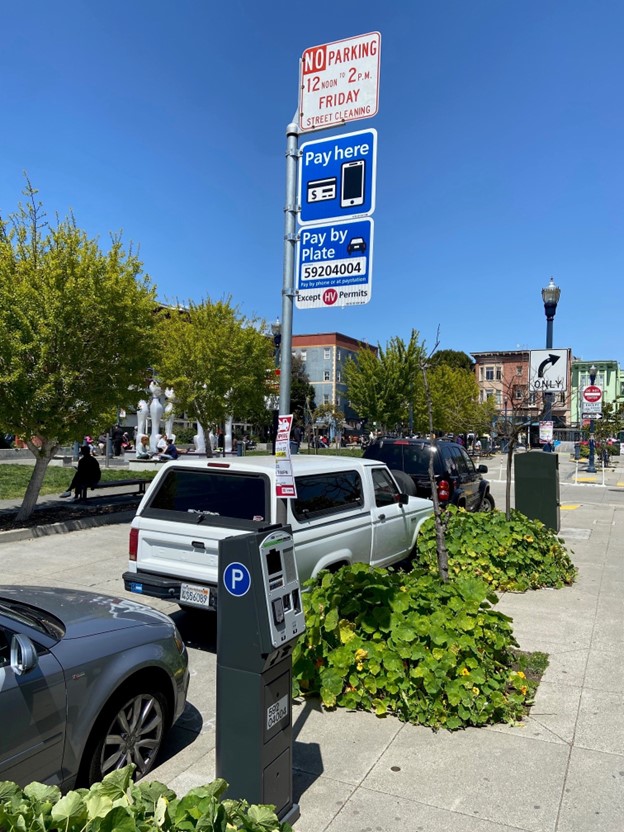
Cars parked along the sidewalk outside with pay station nearby and blue sky above.

Much like real estate, parking is at a premium in San Francisco. For decades, most parking meters in the city have operated from 9:00 a.m. until 6:00 p.m. Monday through Saturday. While drivers generally love free parking, they may not realize that it’s hard to find a space in the evenings and on Sundays in many neighborhoods because the meters are not running. 

Beginning in July 2023 and continuing in phases through December 2024, the SFMTA will extend parking meter hours until 10:00 p.m. Monday through Saturday and add Sunday meter hours from 12:00 p.m. until 6:00 p.m. Parking meters already operate in the evenings or on Sundays in some areas, including Mission Bay, South Beach, the 18th Street business district in Potrero Hill and along the Embarcadero. This extension will make meter hours more consistent citywide, create more parking availability and generate revenue to help the agency sustain vital Muni service. San Francisco has changed considerably since the current parking meter hours were introduced in 1947. Cities locally and around the country run their parking meters in the evenings and on Sundays because these days, many businesses are open then. Since parking spaces tend to turn over more quickly when meters are in operation, extending meter hours can help businesses by making parking more available and therefore allowing drivers to spend less time looking for a space. Fewer drivers circling the block to look for parking means reduced traffic congestion, less air pollution and fewer greenhouse gas emissions. 

Extending meter hours also will help the SFMTA address a potentially catastrophic budget shortfall. The agency anticipates a projected $130 million deficit starting in Fiscal Year 2025 due to COVID-19's ongoing effects. Without additional funding, we could be forced to eliminate as many as 20 Muni lines, which would disproportionately affect those with low incomes, people of color, older adults and people with disabilities.  

Evening and Sunday parking meter hours will be implemented in six phases over a period of 18 months, beginning with Dogpatch and Fisherman’s Wharf. To take into account historic inequities in San Francisco, lower-income neighborhoods whose residents are predominantly people of color will come last in the rollout. We also are in the process of replacing every parking meter in the city. The extended meter hour implementation is designed to follow behind the installation of new meters, which will have bigger, brighter and easier to use screens; operate in English, Spanish and Chinese; and are more resistant to vandalism. 

In the meantime, SFMTA staff will be doing extensive outreach and meeting with merchant groups, religious leaders, neighborhood groups and elected officials to discuss the program.  

We do understand that extending parking meter hours will impact people who drive to religious services on Sundays. However, those drivers likely will only have to pay for parking for a few hours, if at all, because the meters won’t begin operating until noon on Sundays. There also will be no time limits at metered spaces after 6 p.m. or at any time on Sundays, giving drivers the freedom to decide how much time to spend at dinner, a religious service or wherever they might be, without having to feed the meter repeatedly. Plus, thanks to the SFMTA’s Demand Responsive Parking Pricing program, drivers will often find less expensive parking meters just a block or two away from busier corridors.  

To learn more, visit the project website (SFMTA.com/ModernMeterHours).  


Published May 16, 2023 at 11:45PM
https://ift.tt/TCILXqF

Thursday, 20 April 2023

Muni Improvements Draw Increased Ridership

Muni Improvements Draw Increased Ridership
By Kate McCarthy

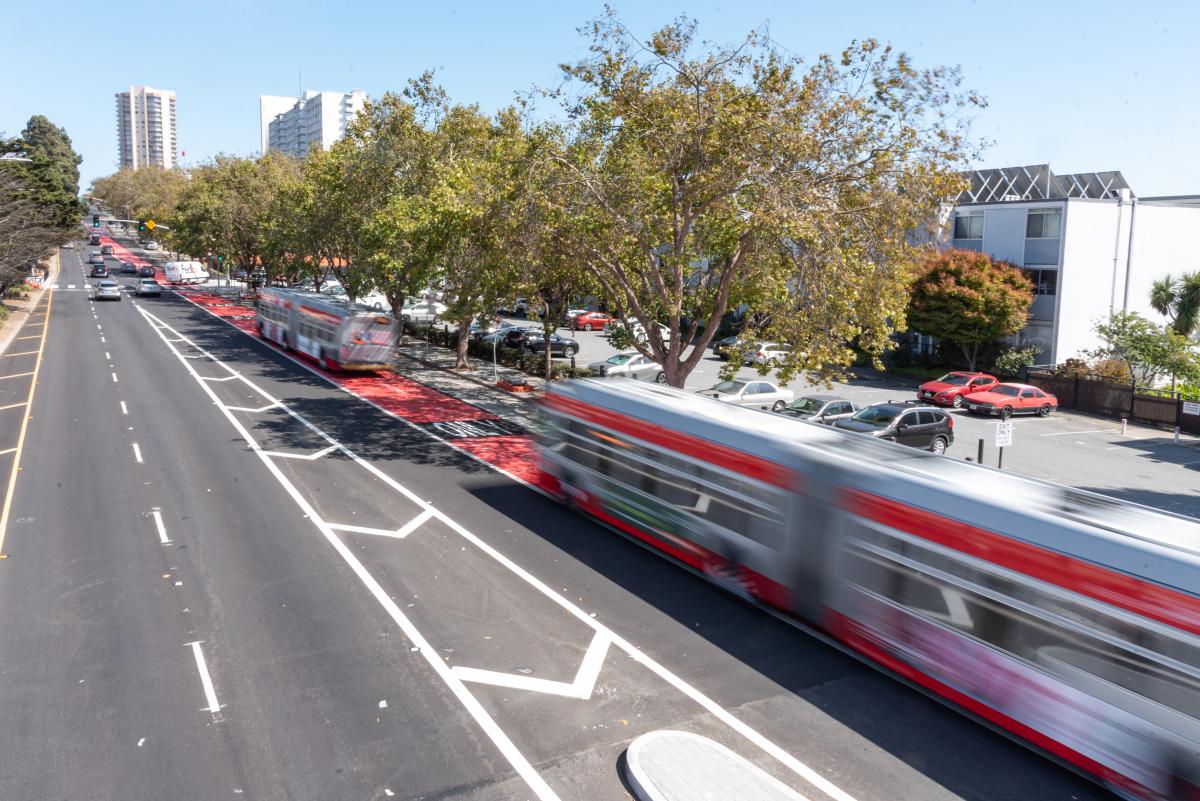
Buses driving towards downtown on Geary Boulevard.

38 Geary buses zip downtown on new transit lanes that improve travel times for Muni riders.

As Earth Day approaches and we think about how to encourage more people to take non-car trips, recent Muni improvement projects are drawing increased ridership across the city. While Muni ridership downtown has not yet rebounded to pre-pandemic levels, ridership has gone up on Muni lines where we have improved speed and frequency of Muni service. 

Muni is a lifeline for many of our riders: 70% of Muni riders have an annual income of less than $50,000. As we restored and added Muni service after the start of the pandemic, we invested in the routes that serve people who rely on transit and need it most. For example, after we installed transit lanes, increased frequency and re-routed the 22 Fillmore to bring people to their jobs and medical appointments in Mission Bay, ridership increased to 107% of pre-pandemic levels on weekdays and 118% on weekends. 

Since the start of the pandemic, we’ve implemented more than 21 miles of new transit priority lanes, growing our transit lane network (https://ift.tt/3SBwHha) to over 70 miles. These transit lanes are improving travel times for Muni riders across the city. After transit lanes were installed on Mission Street in downtown, travel times on the 14 Mission and 14R Mission Rapid are now 31% quicker. 

Ridership numbers on the 49 Van Ness-Mission also blossomed to 109% of pre-pandemic ridership on weekdays and 114% on weekends after construction on the Van Ness BRT corridor was completed last April. With physically-separated transit lanes and transit signal priority that gives the green light to Muni and Golden Gate Transit buses, riders there are seeing travel times reduced by 35%. 

A similar story has emerged on San Francisco’s busiest transit boulevard — Geary. Like other lines that serve downtown, the 38 Geary hasn’t fully recovered to pre-pandemic ridership levels. But the route did nab a spot in the top 10 highest recovered routes in the Muni system. The 38 Geary’s 36,000 daily riders have recently seen travel time savings of up to 18% since we installed three miles of new transit lanes, bus stop changes and other improvements as part of the Geary Rapid Project. We plan similar improvements on the western end of the corridor as part of the Geary Boulevard Improvement Project.     

Muni riders have noticed that improvements to our busiest Muni lines are making service faster and more reliable than it has been in decades. Two-thirds (66%) of Muni riders who took our Annual Muni Rider Survey last fall rated Muni service as “good” or “excellent” — a 9% increase from 2021 and the strongest increase since 2018. 

These improvements can’t come soon enough. Most of San Francisco’s greenhouse gas emissions come from cars and trucks. As the urgency to address climate change mounts, so does the need to get the most out of our Muni system. To inspire riders to come back to Muni, we’re working hard to bring back the Muni system our city deserves: One that is thriving with the better frequency, improved reliability and better connections that these projects are delivering. 


Published April 20, 2023 at 10:54PM
https://ift.tt/2EhGT0H

Wednesday, 15 March 2023

100 and Counting – More New Trains Join the SFMTA Fleet

100 and Counting – More New Trains Join the SFMTA Fleet
By Christopher Ward

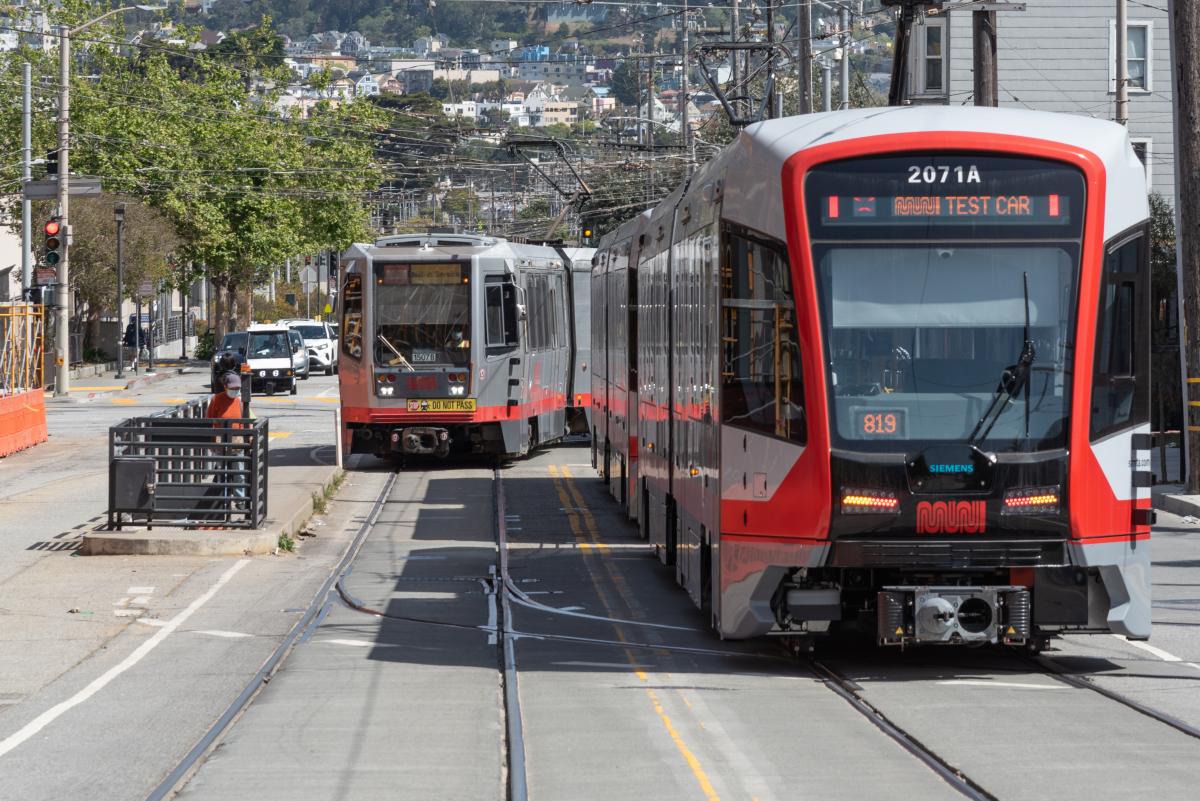
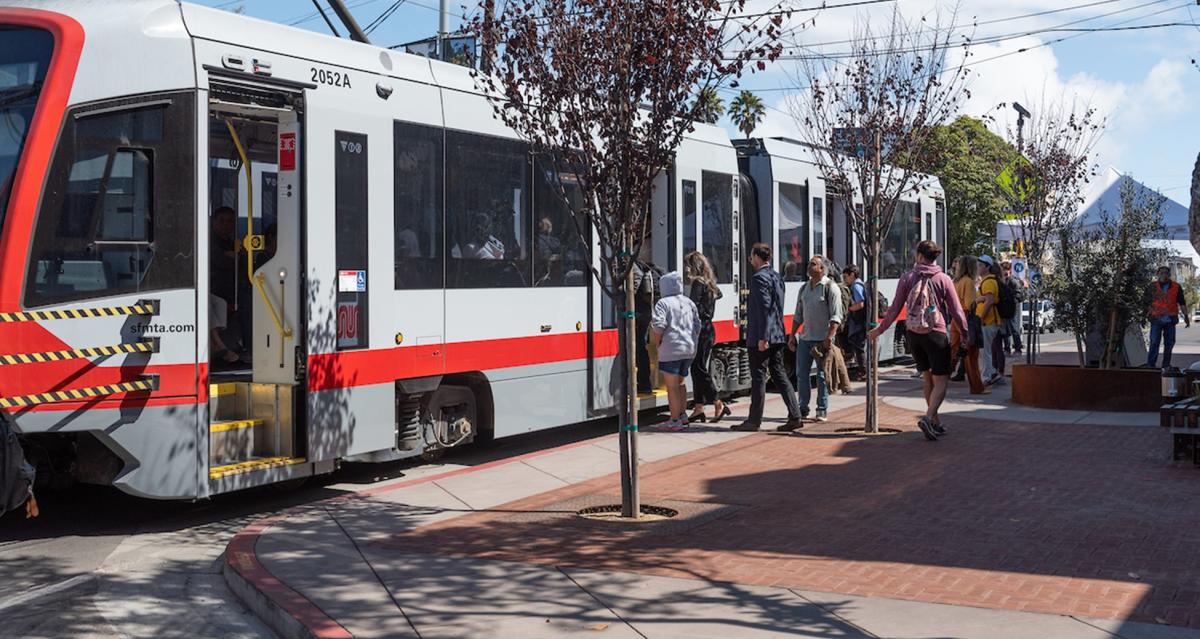
Photo of an older Breda model Muni Metro train on the street in the background, and a new LRV4 model Muni Metro train in the foreground.

Muni continues to expand its fleet with its 100th light rail vehicle four-series (LRV4) on San Francisco streets, broadening the reach of transportation in the city! 

The SFMTA received its 100th new LRV4 (light rail vehicle four-series) in December 2022, closing out a year of big accomplishments for the agency. This train represents a milestone in the continued progress of the LRV Fleet Replacement Program.  

The SFMTA is steadily expanding its fleet with about three new LRV4 train cars arriving every month. We expect 219 total cars to be delivered by 2025. This allows us to retire the aging Breda vehicles, which have been in use by the SFMTA since 1955. Compared to the mostly grey Bredas, the new LRV4 trains are easy to spot on the street, with their distinctive “red ribbon” that wraps around the front of the vehicle and down the sides.  

The new LRV4 trains are also far more reliable than the outdated Bredas. With better design and engineering, these trains have fewer breakdowns and require less maintenance. This makes them more reliable and less expensive to operate, which means better service for Muni riders. 

The new LRV4s have improved safety and service features. In response to customer feedback, the seats are color-coded – blue indicates priority seating for seniors and people with disabilities, and red indicates general seating. We also added more visible, yellow grab rails. The LRV4s also have digital displays that show information about upcoming stops and nearby alternate routes at transfer points. These same interior upgrades will be added to earlier LRV4 trains over the next year.  

Learn more about the history of LRVs, look into Muni Light Rail Through the Years and follow us on Instagram (Instagram.com/sfmta_muni). 


Published March 16, 2023 at 12:30AM
https://ift.tt/3wtJEyY

Monday, 30 January 2023

A Day in History: Market Street Subway Milestone

A Day in History: Market Street Subway Milestone
By Jeremy Menzies

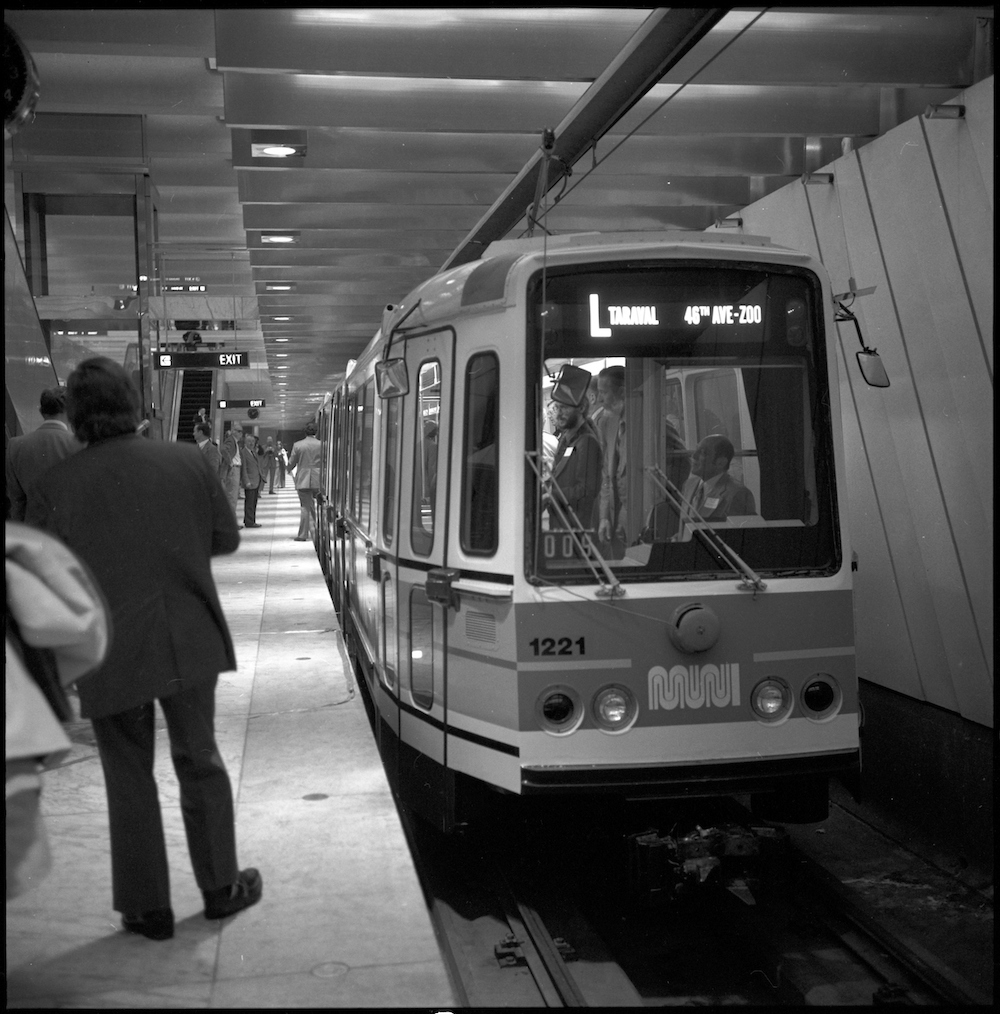
Forty-five years ago on January 31, 1978, San Francisco Muni and city officials along with members of the press took an inaugural ride in the brand new Market Street Subway from Castro Station to Embarcadero.

black and white image of Muni LRV on L Taraval Line waiting at platform inside Embarcadero Station

The inaugural run traveled roughly three miles from Castro Station to Embarcadero Station.

The three-mile-long Market Street Subway forms the backbone of the Muni Metro system. Built alongside the BART tunnel which runs below, the subway provided faster service through downtown for local and regional travelers.

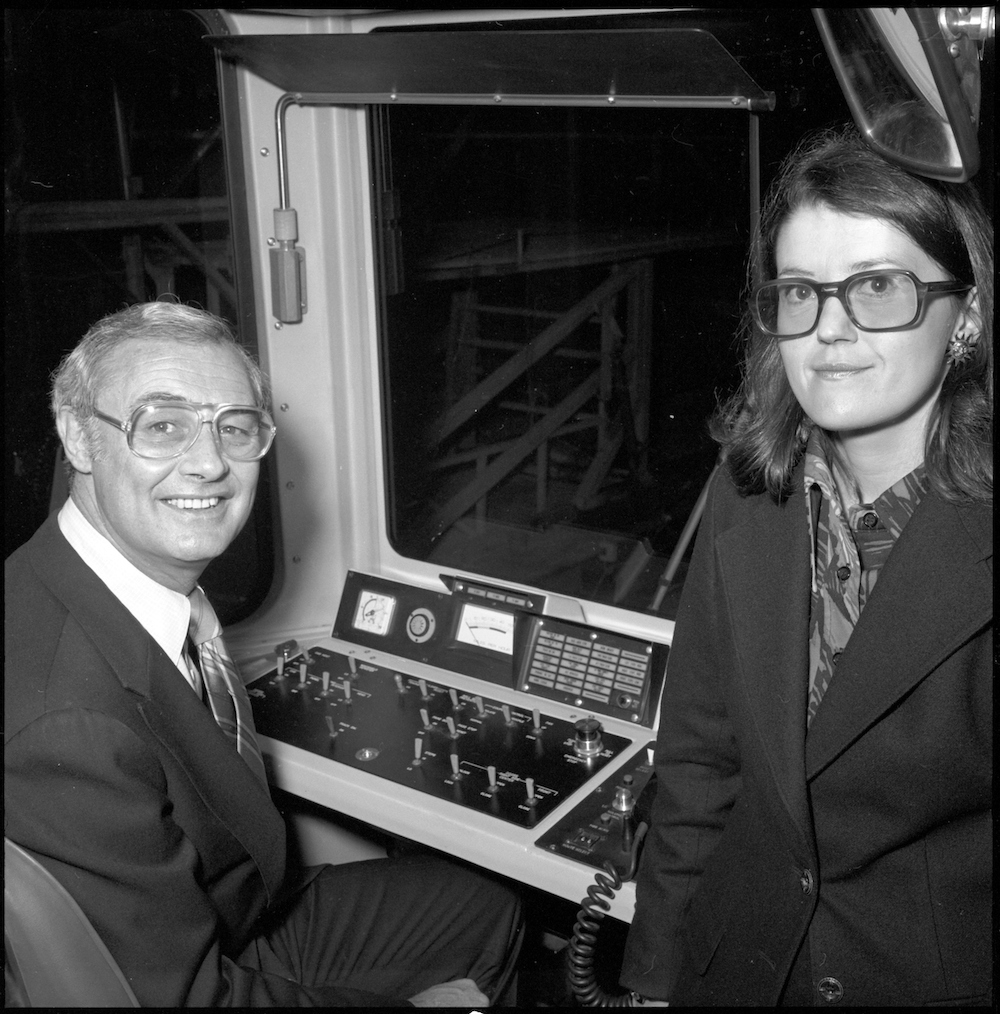
black and white photo of Mayor George Moscone seated at controls of Muni LRV with SFPUC Commissioner Claire Pilcher standing

San Francisco Mayor George Moscone and Public Utilities Commissioner Claire Pilcher pose for a photo in the operator’s compartment of one of Muni’s first light rail vehicles.

In development for 50 years and under construction for another ten, the Market Street Subway took longer to implement than any other transit project before or after.

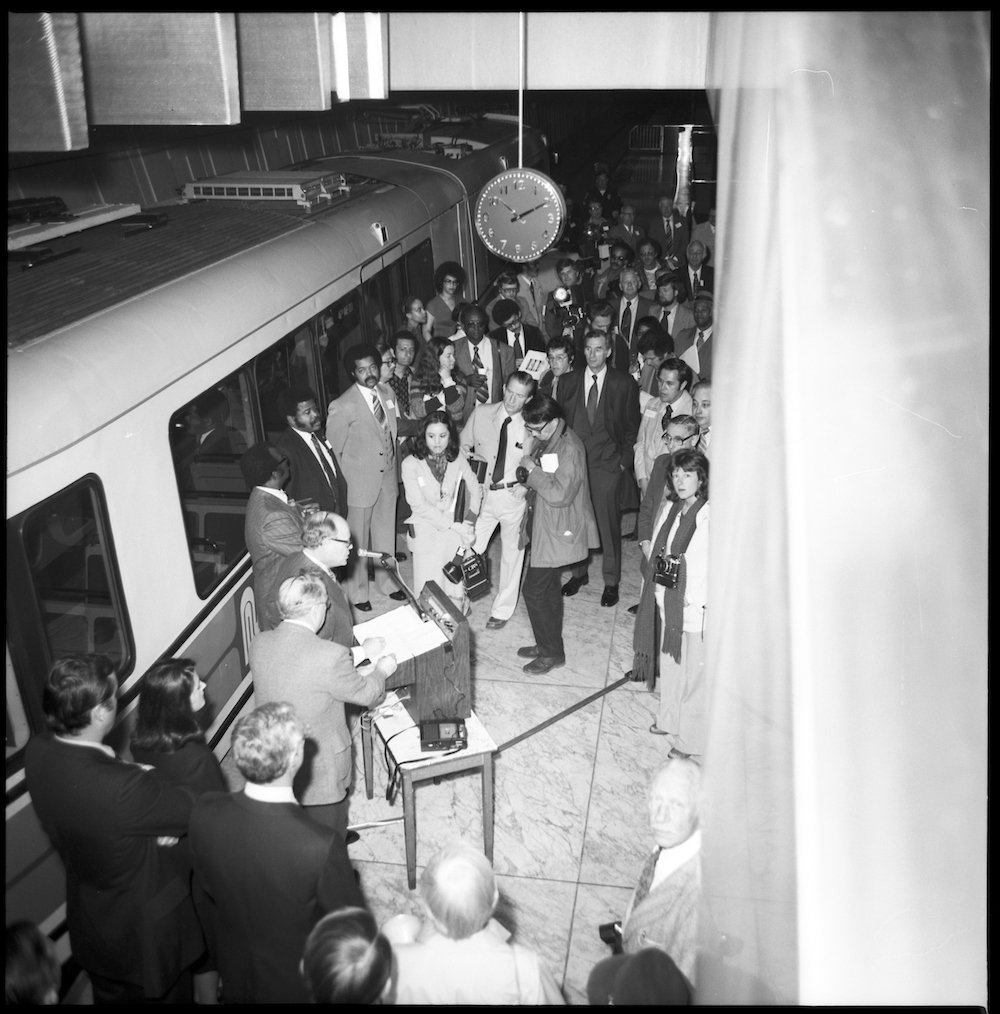
black adnw hite photo looking down to platform at Embarcadero Station to crowd of people next to LRV and speaking podium

A large crowd of people and press came out for the ride and press conference at Embarcadero Station.

At the time of this event, San Francisco’s main transit tunnel was the Twin Peaks Tunnel, which opened in 1918. The Twin Peaks Tunnel shuttled people on the K, L, and M Lines from the Castro to West Portal, decreasing travel time from the southwest side of town significantly. Streetcars exited the tunnel at Castro Street and travel along Market to downtown. This trip along the busiest street in the city frequently negated any travel time savings in the tunnel.

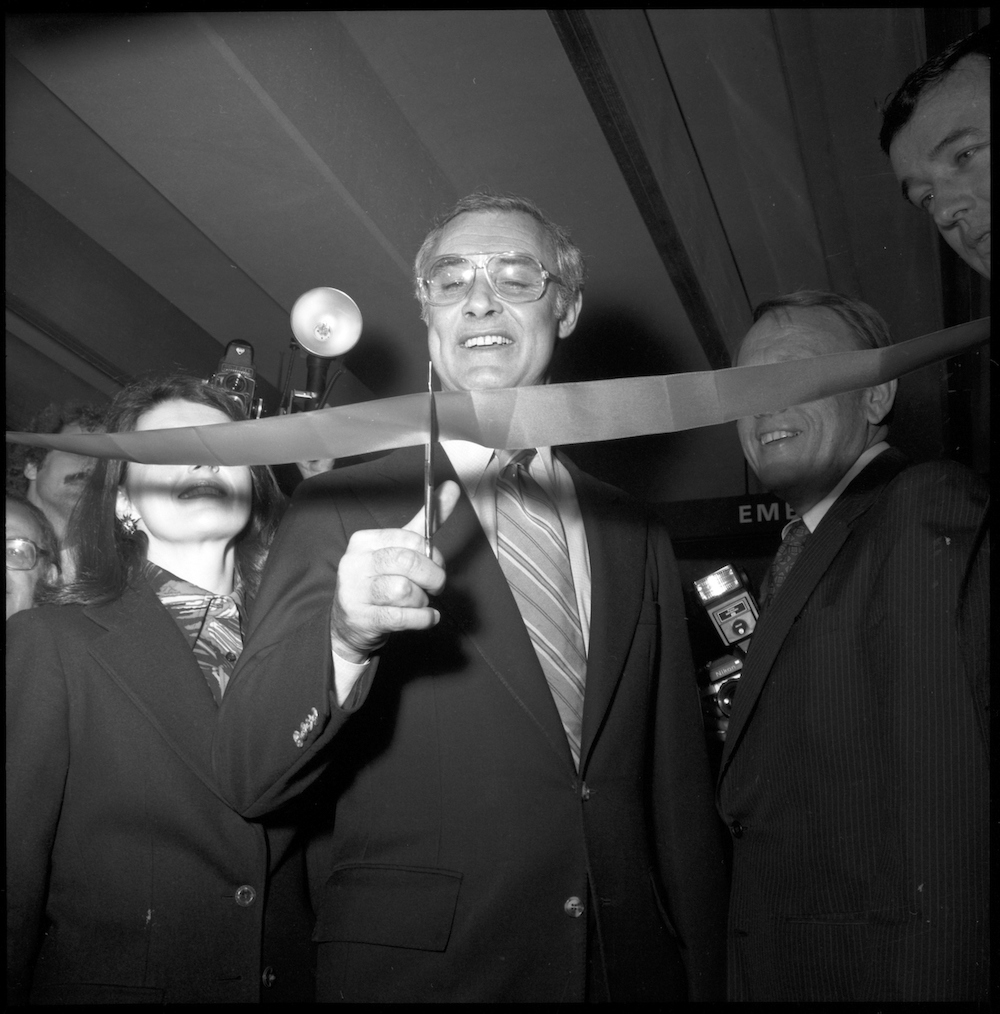
black and white photo of Mayor George Moscone cutting ribbon with scissors

Capping off the celebration was a ribbon cutting led by Mayor Moscone.

With the Market Street Subway linked to the Twin Peaks Tunnel, Muni began a new era of rail service using Light Rail Vehicles. Designed to increase capacity, LRVs could run on the surface then enter the subway and travel unimpeded by street traffic five miles from downtown to West Portal and back. This first train ride and ribbon cutting marked the end of a long wait and the beginning of a new subway system for San Francisco.


Published January 30, 2023 at 11:20PM
https://ift.tt/R46tpLu

Wednesday, 4 January 2023

Ride to Chase Center Events Along the New T Third

Ride to Chase Center Events Along the New T Third
By Christopher Ward

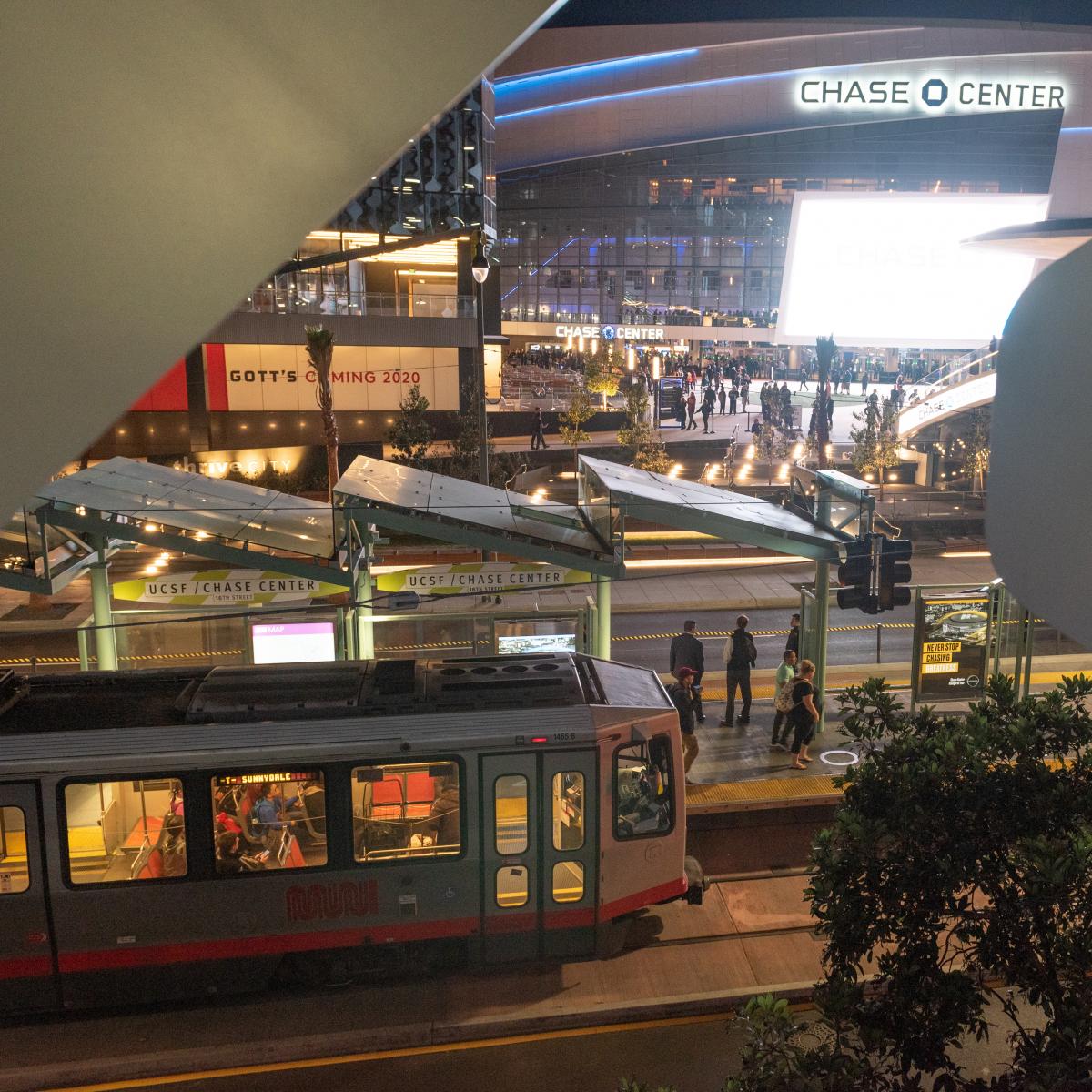
 Photo of a Muni Metro train at the UCSF/Chase Center platform with Chase Center in the background.

Starting January 7, take the S Shuttle Mission Bay on the new T Third line via Central Subway to Chase Center events.

Service on the new T Third Line from Chinatown Rose-Pak to Sunnydale starts January 7. With it, new event service to Chase Center will also start via Central Subway on the S Shuttle Mission Bay.

During events at Chase Center, shuttles will operate between Chinatown-Rose Pak Station and UCSF/Chase Center every 10 minutes. These shuttles will start approximately two and a half hours before an event and continue for two and half hours after an event.

From Chinatown to Chase Center, riding the S Shuttle Mission Bay takes about 20 minutes. Best of all, your Chase Center event ticket is your Muni fare. No additional Muni fare needed!

  • Both electronic and physical tickets for events – including Warriors games, concerts and other events – will serve as proof of payment for Muni service throughout the day.
  • The ticket will be valid all day and expire at the end of the service day at 2 a.m. after the event.
  • Passengers with a valid ticket can board through any door so we can quickly get you to the event or game! There is no need to show your Chase Center ticket to a bus or rail driver.
  • Keep your event ticket handy for proof of ticket purchase. To avoid fines, you will need to show your valid event ticket as proof of purchase if requested by a Transit Fare Inspector.

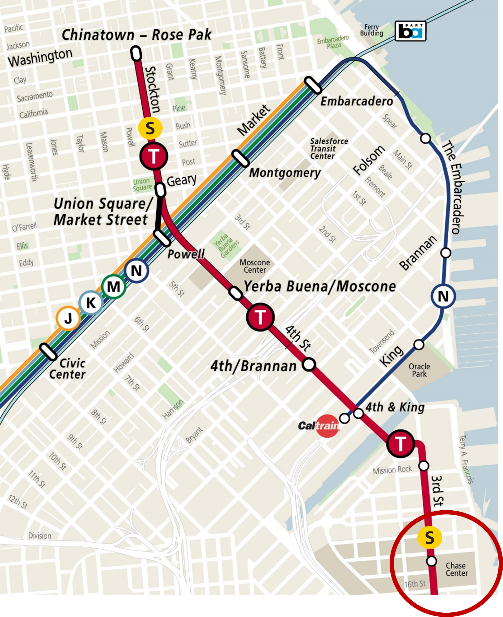
Map showing the new alignment of the T Third to Chinatown-Rose Pak Station, connecting from 4th and King streets and continuing north to Central Subway; existing Muni Metro system's J Church, K Ingleside and M Ocean terminating at Embarcadero Station; the N Judah continuing along the Embarcadero to Embarcadero & Folsom, Embarcadero & Brannan and 2nd & King and onto 4th & King; S Shuttle service between Chinatown and Chase Center.

The S Shuttle Mission Bay will operate between Chinatown-Rose Pak Station and UCSF/Chase Center during Chase Center events.

Muni Metro and BART customers can transfer at Powell Station underground to Union Square/Market Street Station and board the S Shuttle Mission Bay southbound to the UCSF/Chase Center Station. At Union Square/Market Street Station, elevators to the platform are in the center of the station with their own fare gates.

Customers traveling past Chase Center should board trains with head signs that say “T Third Sunnydale” to avoid transferring at Mission Bay.

The 78X 16th Street Arena Express will continue to run express service between Chase Center and the 16th Street BART station two and a half hours before events and one hour after events.

Visit our Chase Center webpage (SFMTA.com/ChaseCenter) for more information.


Published January 05, 2023 at 01:01AM
https://ift.tt/wk6pqHI

Monday, 19 December 2022

Upcoming Capacity Indicators

Upcoming Capacity Indicators
By Christopher Ward

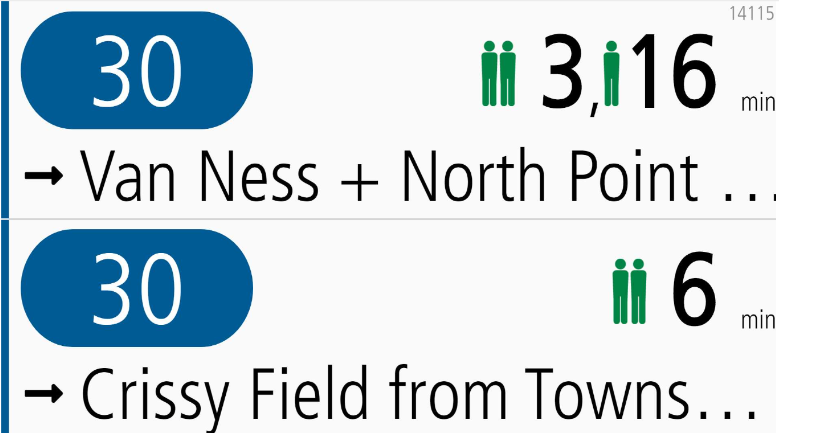
Image of new stick figures indicating bus capacity on shelter signs.

Next Generation Customer Information displays will show capacity indicators: One figure means there are many seats available. Two figures indicates that there are likely a few empty seats available. Three figures tell you that there’s likely only standing room available.

The SFMTA continues expanding trip planning and accessibility features and improving Muni predictions. This is part of the ongoing Next Generation Customer Information System (CIS) project. One of the newest features is a capacity indicator.

A capacity indicator helps customers understand how much space is available on vehicles. Customers can see the indicator on our Next Generation displays in the bus shelters and on train platforms. Customers may use this information to make travel choices. For example, customers can choose to wait for a less full vehicle or take an alternative route.

As of November 2022, Muni vehicles equipped with automatic onboard passenger counters send capacity information to our Next Generation CIS. This information is now shown symbolically with stick figures. One figure means there are many seats available. Two figures indicates that there are likely a few empty seats available. Three figures tell you that there’s likely only standing room available.

Customers should always yield the priority seating area for people with disabilities, older adults, and pregnant persons.

We’re excited to finally bring these features to our customers and build a system that will help make Muni travel even more efficient, reliable and enjoyable.


Published December 20, 2022 at 12:08AM
https://ift.tt/rNM0oWY

Friday, 9 December 2022

Public Artwork Unveiled Inside New Station in Yerba Buena

Public Artwork Unveiled Inside New Station in Yerba Buena
By Enrique Aguilar

Have you had a chance to explore the Central Subway's new stations? Special weekend service is Saturdays and Sundays, from 8 a.m. to 12 a.m. midnight, through the end of the year. Ride the trains and be mesmerized by beautiful artwork at each new station. 

Muni customers will encounter public art when using the four new Central Subway stations to reach their destinations. The art was commissioned by the San Francisco Arts Commission and funded by the City’s Art Enrichment Ordinance, which allocates 2% of the total eligible costs of public works projects for public art. Public art helps draw out the identity of a space, aids in understanding a neighborhood's historical or cultural significance, and builds a connection between the visitor and surrounding community. 

The Yerba Buena/Moscone Station includes artwork by Catherine Wagner, Leslie Shows and Roxy Paine. The installations can be found on the station's surface and concourse levels. 

  • Catherine Wagner transformed photographs she took in the late 1970s that document the monumental construction of the George Moscone Convention Center, and focus on ideas of transformation. Titled Arc Cycle, the artwork reproduces several iconic images from this photographic series, translating them into laser-etched granite at the concourse level, and art glass at the station’s entry.  

  • Leslie Shows created Face C/Z, installed in the ticketing hall on the concourse level. Based on an image of iron pyrite made with a consumer grade scanner, the artwork was hand fabricated in a unique style combining mirrored, fused, painted, and engraved glass, sheet metal, and other permanent materials The pyrite (or "fool's gold") image speaks to ever-shifting notions of value in industry and aesthetics, the many historical "gold rushes" of California, and the idea that anything might be made valuable under the right circumstances.  

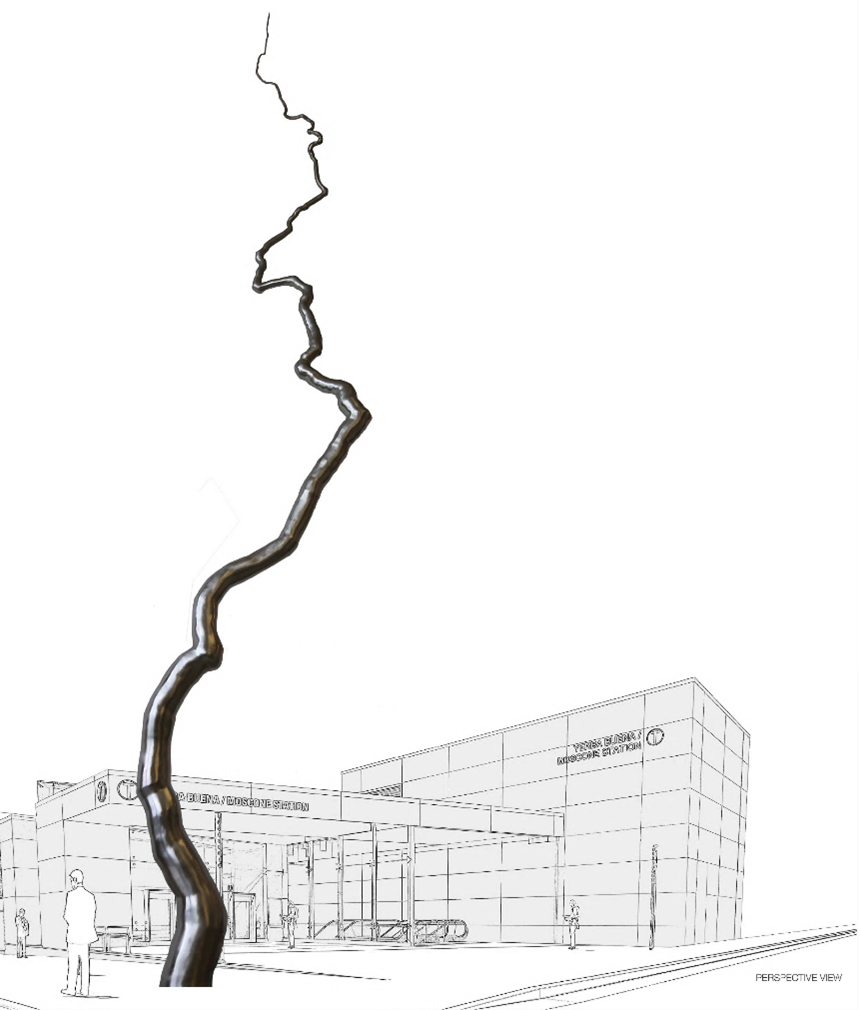
  • Roxy Paine created a monumental, 110 feet tall sculpture for the public plaza at 4th and Clementina streets outside of the station. Titled Node, the artwork is conceived to emerge from the complex manmade structures existing beneath the sidewalk, including the subway, communication networks, electrical and water supply, and waste systems that are all lifelines of a functioning city. According to Paine, the sculpture is "an elegant line connecting earth to sky, people to underground systems, and sculpture to city." Node is expected to be installed in early 2023. 

Rendered image of an art node piece in front of a building with a person in the foreground

Mockup of art installation on the station's plaza

Watch an interview video with artists Leslie Shows and Catherine Wagner to learn more about their inspiration for their work on display at the new Yerba Buena/Moscone station. A special thank you to the San Francisco Arts Commission for making public art possible at the four new stations. 

Full revenue service will begin January 7, Monday through Friday, 6 a.m. to midnight and Saturdays and Sundays, 8 a.m. to midnight. 

Stay tuned for additional blogs showcasing public art at the other new Central Subway stations. 

For more artist information:


Published December 10, 2022 at 12:35AM
https://ift.tt/G9VePkf

Thursday, 10 November 2022

SFMTA Upgrades Predictions Software This Weekend!

SFMTA Upgrades Predictions Software This Weekend!
By Mariana Maguire

SFMTA will switch over to a new, upgraded software system on Sunday, November 13,  as part of our Next Generation Customer Information System (CIS) project. The new software was developed to improve the way our different information systems communicate with each other and share data to and from multiple sources. This will provide customers more accurate, timely, reliable Muni service predictions. This is one more important step in the overhaul of our CIS that will enable us to provide better service to Muni customers.

SFMTA’s Next Generation CIS software has been in preliminary testing for months, and if all works well, Muni customers should not notice any change. But anyone who’s had to help loved ones with computer or smartphone troubles knows that software updates aren’t always smooth. Unanticipated challenges may arise. Customers should expect some glitches as we make the software switch and work out issues on the back end.

To reduce impacts to customers, we are gradually connecting new screens to the new software system. This should help isolate any issues to troubleshoot more effectively. Our Customer Information System staff and software contractors will be keeping a close eye on system performance and working quickly to resolve issues.

This upgrade to a new, more efficient software system is a crucial milestone toward providing many new features over the coming months, including:

  • Dynamic maps
  • Real-time service changes
  • Short-term route changes
  • Terminal departure predictions
  • Transfer connection predictions
  • Regional connections
  • Alternative routes
  • Accessibility information​
  • Vehicle crowding predictions

Third Party Apps

SFMTA provides open-source transit data that third party transit apps use on their platforms. Each app has its own way of processing that information, which can vary and may lead to differences or inconsistencies in transit information. SFMTA is in touch with known third party apps to help them troubleshoot issues.

We appreciate Muni riders’ patience as we continue our Next Generation CIS upgrades to improve Muni service long-term.

Learn more about what’s next for our Next Generation upgrades and the many new features rolling out soon.


Published November 10, 2022 at 10:59PM
https://ift.tt/jNf6w8H

Wednesday, 2 November 2022

Over Half Next Generation Muni Shelter Displays Installed with More Upgrades Coming

Over Half Next Generation Muni Shelter Displays Installed with More Upgrades Coming
By Kharima Mohamed

New Muni information screen at a bus shelter above Muni system map. New Muni service information displays are going into Muni shelters throughout San Francisco with updated features as part of SFMTA’s Next Generation Customer Information System upgrades.

As part of our Next Generation Customer Information System (CIS) project, we are installing over 800 new, larger Liquid Crystal Displays (LCDs) at Muni shelters and stations, replacing existing NextBus signs and expanding real-time information coverage. So far, we are over halfway to completion, with over 435 new displays installed in shelters. New screens show real-time multilingual information including graphics, maps and destinations.

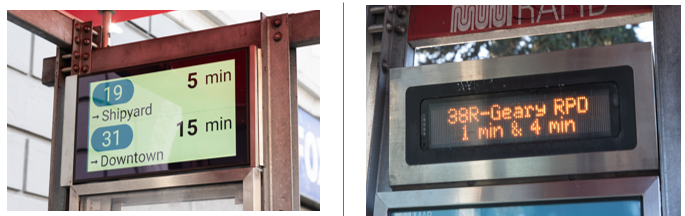
Two displays being shown comparing the old versus new displays

New LCD displays (left) are replacing the previous Muni information displays (right).

Beginning this fall, Muni predictions on our new and improved Next Generation screens will include:

  • Crowding. On vehicles equipped with automatic passenger counters, displays will show how crowded they are.
  • Short-term route changes. We’ll be able to show planned short-term route changes, such as routing around special events. 

We are aiming to replace the remaining displays by the end of 2023. Additionally, we are working on new display locations with an emphasis on underserved neighborhoods, such as those identified by the Bayview Community Based Transportation Plan.

Learn more about the remaining display installation work, what’s next for our Next Generation upgrades and the many new features rolling out soon.

Get Real-Time Stop Information When Predictions Are Unavailable

Due to the nationwide AT&T 3G shutdown on June 8, NextMuni displays that use 3G modems no longer show information. We have been upgrading to 4G modems to continue to provide predictions while we roll out the new LCD display and prepare more significant system software upgrades.

For display locations remain impacted by the 3G shutdown, riders can obtain real-time stop information by using the stop ID number posted at the bus stop:

  • Online enter SFMTA.com/ followed by the stop ID number (no spaces). The stop at Market and 11th streets with stop ID 13245 can be found at SFMTA.com/13245
  • Text “NextMuni” and the stop ID number to 41411. For the stop at Market and 11th with stop ID 13245, send the text “NextMuni 13245” to 41411.
  • Call 511 and say “Departure Times” and the stop ID. For the stop at Market and 11th with stop ID 13245, say “Departure times 13245.”


Published November 02, 2022 at 10:51PM
https://ift.tt/iMO943g

Friday, 14 October 2022

Paratransit Services 2022 Update

Paratransit Services 2022 Update
By Erin McAuliff

This past year, the SFMTA’s paratransit programs safely provided close to half a million trips to older adults and people with disabilities around San Francisco. These services provide door-to-door transportation to people unable to independently use the Muni system. They include SF Access Paratransit, Group Van service, Shop-a-Round shuttles, the Essential Trip Card Program (ETC) and the Van Gogh Recreational program.  

In addition to traditional van services, the SFMTA partners with the local taxi industry to provide cost-efficient and customer-friendly taxi options. Payment is accepted in every San Francisco taxi, including accessible ramp-equipped taxis, with the swipe of an SF Paratransit Taxi debit card.   

Here are a few accomplishments staff at the SFMTA and Transdev (the contractor responsible for managing SF Paratransit services) have been working on behind the scenes to improve our service offerings and continue to fill transportation gaps experienced by older adults and people with disabilities:

  • We bought 26 new paratransit vans with added safety features like audible right turn notifications to warn pedestrians and cyclists; automated safety technology that provides alerts to operators to avoid collisions; and DriveCam technology that records safety-related events.  When we retired our older vehicles, we took the opportunity to transfer three retired vehicles to the San Francisco Fire Department to support the Community Paramedicine Street Crisis Response Team and one retired vehicle to the SFMTA Customer Service Center to serve as its first Mobile Sales Van, bringing SFMTA services to the local community.
  • The Essential Trip Card program launched in April 2020 as a response to the pandemic. Since then, we have enrolled over 5,000 older adults and people with disabilities, providing over 160,000 taxi trips. In July, the program, and the SFMTA’s partnership with local non-profit Community Living Campaign, was featured as a case study for reducing isolation and improving health outcomes among older adults by the National Center for Mobility Management. Community Living Campaign provides full fare assistance to San Francisco paratransit riders in need.
  • Last year, we officially launched SF Access Online to allow riders to schedule their SF Access van trips online. We also launched SF Paratransit Taxi Online, which allows riders, including ETC customers, to pay for their monthly taxi fare allotment and track trip activity online.
  • San Francisco Paratransit Operations was part of the community emergency response team that organized and provided special services when the COVID-19 pandemic struck. Paratransit operators trained by Emergency Management Services (EMS), teamed up with EMS staff to transport vulnerable people to COVID-19 testing, treatment and shelter locations. The work was only assigned to drivers who volunteered, even at the beginning of the pandemic, when no one fully understood the risks of the virus. At its height of demand, 27 full-time drivers were dedicated to this service.
  • This past May, the SFMTA Board of Directors recognized the employees of SF Paratransit for all the work they have been doing, especially the work to innovate new programs that helped our passengers stay connected with essential services during the pandemic. The partnership with EMS also received the 2022 Innovative Practice Bronze Award from the National Association of City and County Health Officials.
  • SFMTA staff have been hard at work preparing for the integration and pilot of Clipper 2.0. SF Paratransit will be the pilot agency to test out using the next generation of Clipper Cards, allowing riders to pay for a paratransit van trip with Clipper for the first time ever. 

The SF Paratransit program also houses the Mobility Management Center, a one-stop-shop for older adults and people with disabilities to access transportation information, resources and referrals tailored to an individual’s needs. Mobility Management staff are available to answer individual questions by phone, email or in-person, or you can schedule an in-person or virtual group presentation for your organization.

San Francisco paratransit operations are funded by San Francisco’s half-cent transportation sales tax. As mentioned in our informational blog, in November voters will have an opportunity to decide whether to extend the sales tax for another 30 years and allocate 11% of the funds to paratransit. More information can be found in the Department of Elections’ Voter Guide under Proposition L or on the SFCTA Half-cent Sales Tax page.

San Francisco has proudly provided paratransit services since 1978, and we have never been more aware of how essential our programs are than during the past few years. We are so grateful for the work our paratransit staff has done and continues to do to serve older adults and people with disabilities in San Francisco.


Published October 15, 2022 at 12:08AM
https://ift.tt/RyEYI76

Friday, 29 July 2022

Six Generations of Pint-Sized Buses Serve Muni’s Toughest Routes

Six Generations of Pint-Sized Buses Serve Muni’s Toughest Routes
By Jeremy Menzies

For over 80 years, special fleets of shorter than usual buses have been reserved for some of the City’s toughest routes. Winding through tight bends and climbing up steep grades, these pint-sized coaches ensure access to transit in neighborhoods where standard-length buses cannot go. As the SFMTA phases in a brand-new batch of shorter buses, here’s a look at all six generations of Muni’s “mini” fleet.

“Baby White” Buses: 1938-1975
The first generation of short-length buses was intended for regular use on all Muni bus routes. Made by the White Motor Company in Cleveland, Ohio, this fleet came to SF in 1938. The buses were nicknamed “Baby Whites” after a group of longer White Co. buses arrived in 1947. In the mid 1950s, all but three of these buses were retired. The three saved continued to run on the 39 Coit Tower route until 1975—in service longer than any other bus before or after.
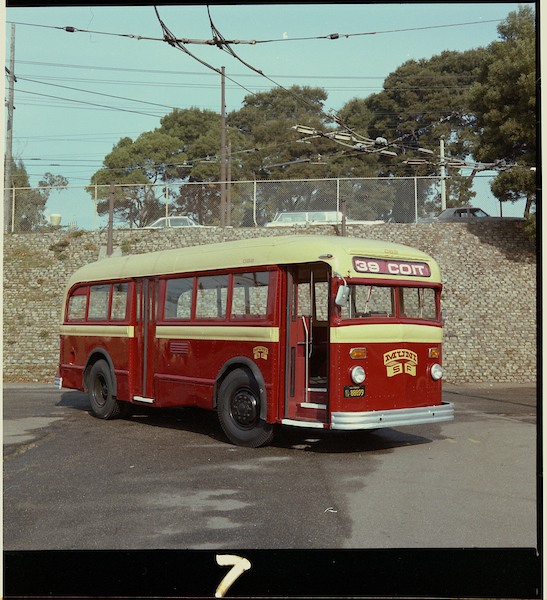
Muni bus 062 in red and yellow paint job with “39 Coit” route sign. 
This bus has served longer than any other in Muni’s fleet, wearing at least three different paint schemes and running regularly for 37 years straight. Restored in 2012 to its original orange and black colors and number (042), it’s back in special service today during Muni Heritage over 80 years after arriving in SF.

“Mini Macks”: 1970-1979
Unique among all the shorter buses that have served SF is a small number of buses built by the Mack Truck Company. In the 1950s, Muni contracted with Mack to lease a large fleet of 450, 38-foot long buses. As these were returned at the end of the lease in 1969-1970, two buses were saved for a special reassignment. Shortened by several feet by cutting out a section of the bus, these two coaches were meant to replace the 30-year-old White buses on the 39 Route.
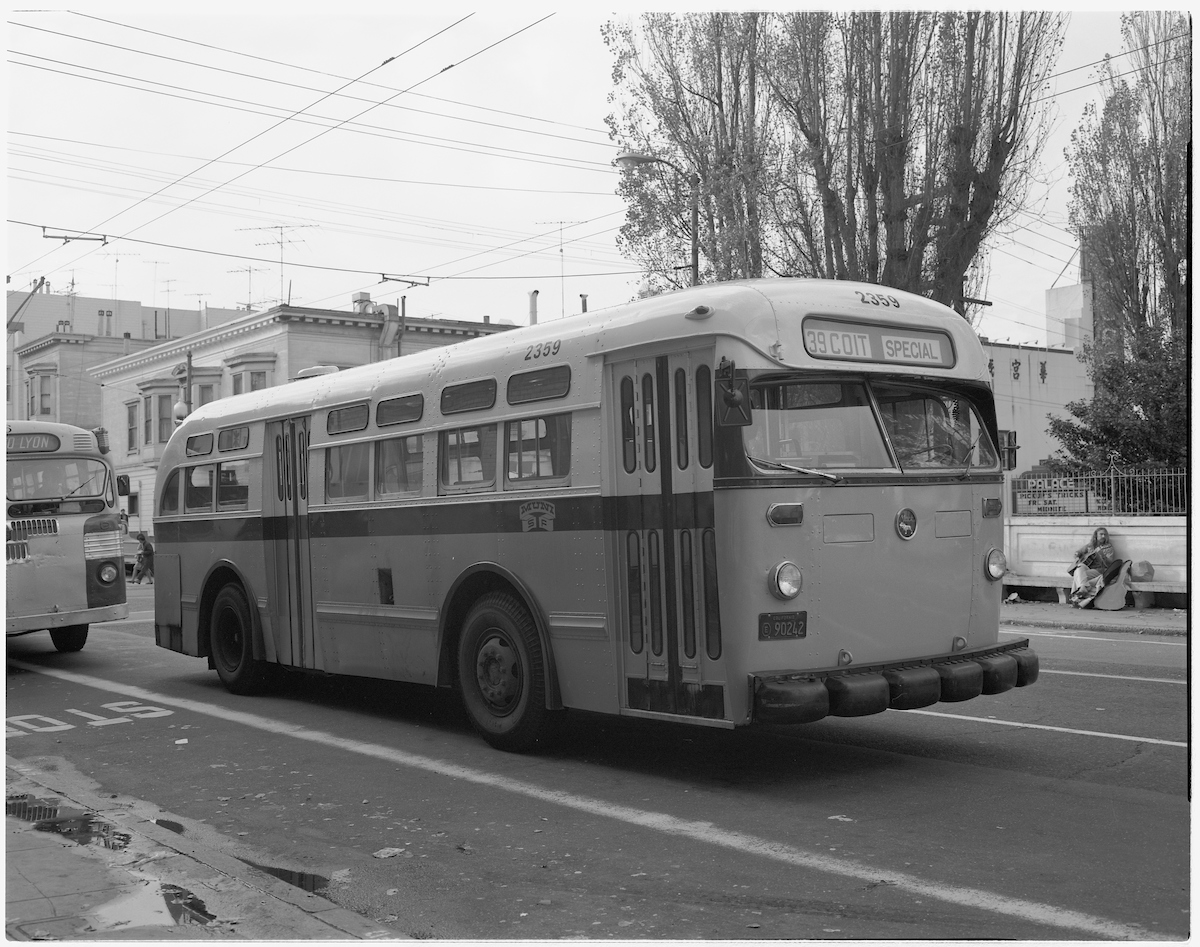
Bus on 39 Coit route at bus stop across from Washington Square Park.
Delivered in 1957 as a 38’ long bus, this and one other Mack bus were chopped down and painted in Muni’s Maroon and Gold colors around 1970. Both served the 39 Coit for nearly a decade.

The “Amys”: 1974-1991
The first fleet of buses specifically purchased to fit the need for smaller buses was a batch of 100 buses built by the AM General Company in the mid 1970s. Nicknamed “Amy’s”, these buses were also the first to arrive wearing the new Muni orange and white Sunset livery and famous “Worm” logo. Today, bus #4154 is part of our vintage bus fleet, operating in special service during Muni Heritage.
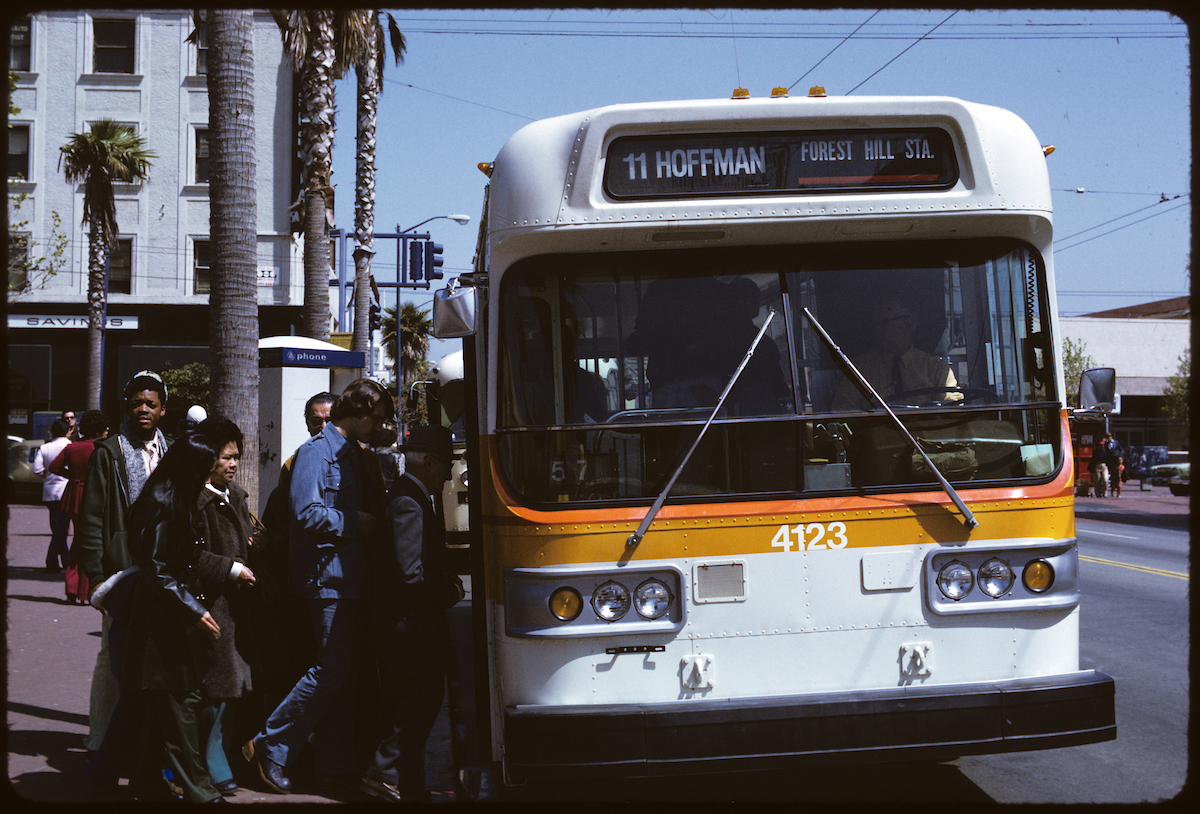
People boarding bus on Muni 11 Hoffman route. 
People board an AM General bus running on the 11 Hoffman route at Mission and 16th in this 1975 photo.

Orion Fleet #1: 1990-2007
As the AM General buses aged, Muni bought replacements from the Orion bus company in the early 1990s. Even shorter than their predecessors, these were well suited to routes like the 36 Teresita, which winds through Twin Peaks, Diamond Heights, Glen Park, and Bernal Heights.
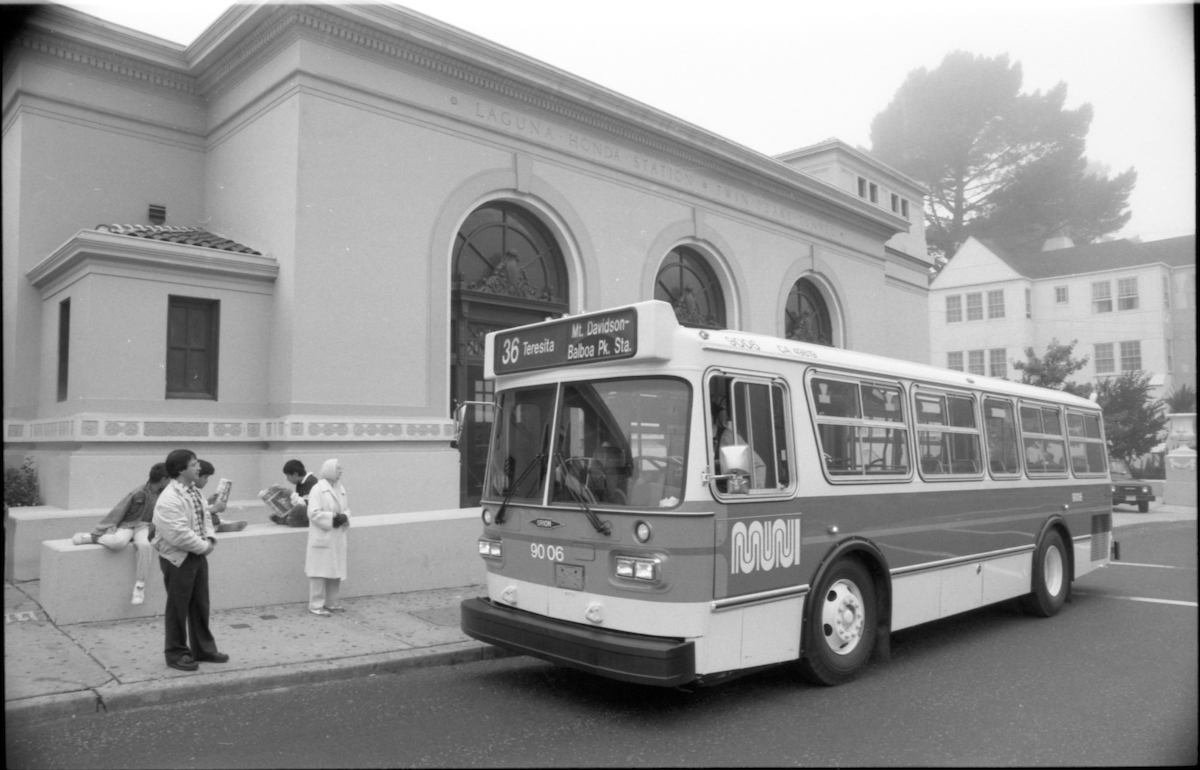
bus with people standing on sidewalk, forest hill station, and fog-covered trees in background.
Forest Hill Station sits shrouded in fog in this 1990 photo of a new Orion bus on the 36 Teresita Route.

Orion Fleet #2: 2007-Present
Following the original batch of Orion buses was a second that hit the streets in 2007. Purchased simultaneously with standard 40-foot-long buses, these were among the first low-floor hybrid buses to serve San Francisco. The new design of these 30 and 40-foot Orions provided easier boarding and quieter, more efficient operation.
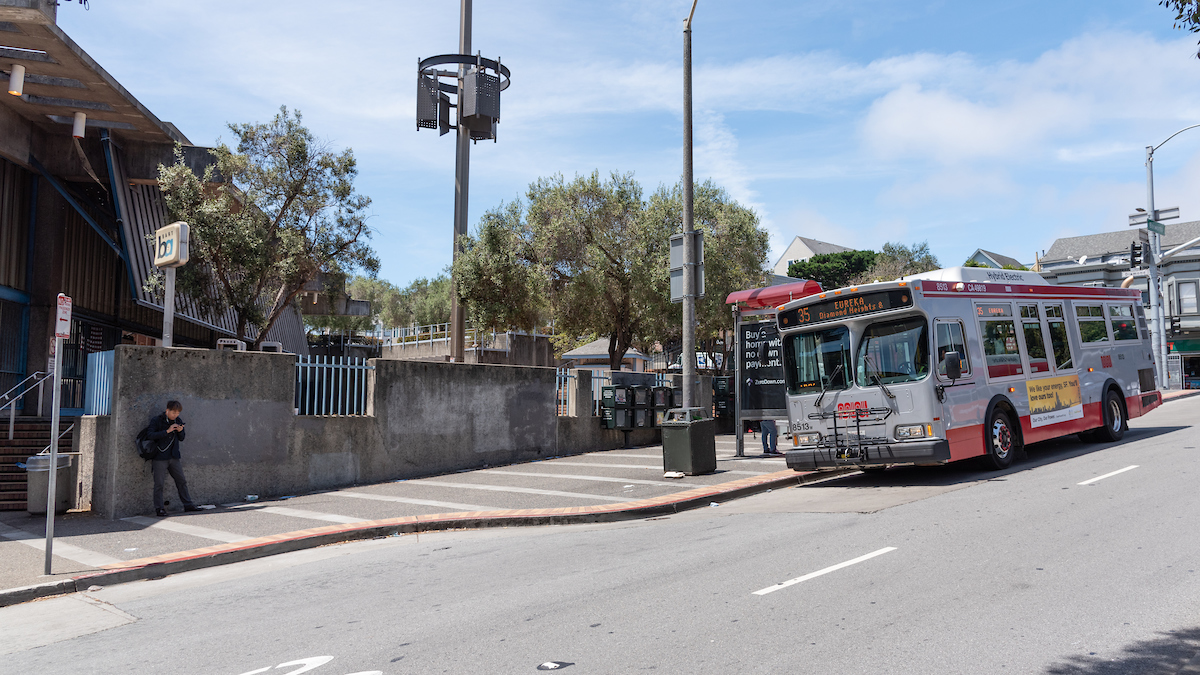
bus in front of stop and sidewalk with BART station in background.
A second-generation Orion bus stops at Glen Park BART on the 35 Eureka Route.

ENC EZ-Rider II: 2022-
Today, the SFMTA is replacing its 15-year-old fleet of 30-foot Orions to provide more reliable, cost-effective service on the routes historically served by shorter buses. These new buses, a few of which are already in service, are built by ENC (El Dorado National-California) based in Riverside. At 32-feet long, they have seating for around 25 passengers and room for multiple people using wheelchairs. The first of these buses arrived for acceptance and testing in late 2021 and entered service earlier this year.
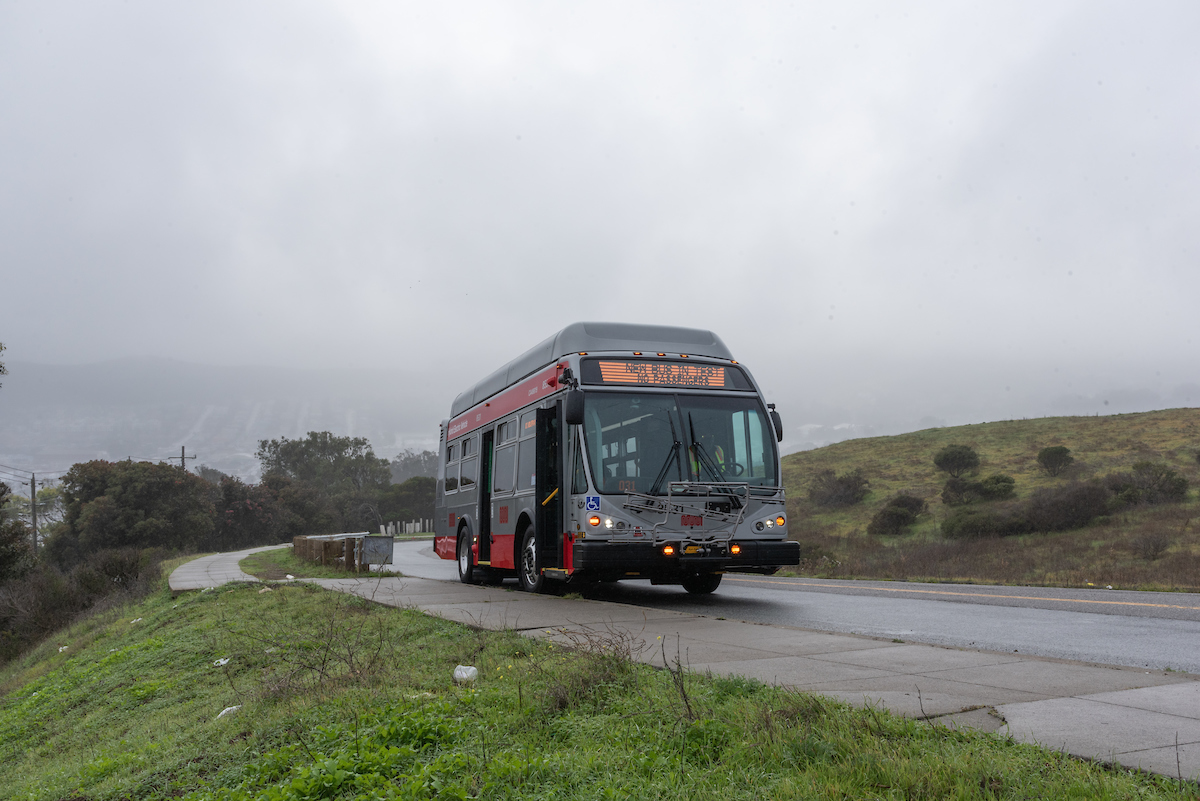
Muni bus parked on street with fog and hills behind.
Climbing a grade in McLaren Park, a new 32’ ENC bus tests on the 56 Rutland in late 2021.


Published July 30, 2022 at 12:01AM
https://ift.tt/FGLviys

Thursday, 2 June 2022

Muni Forward Gets San Francisco Moving

Muni Forward Gets San Francisco Moving
By Shalon Rogers

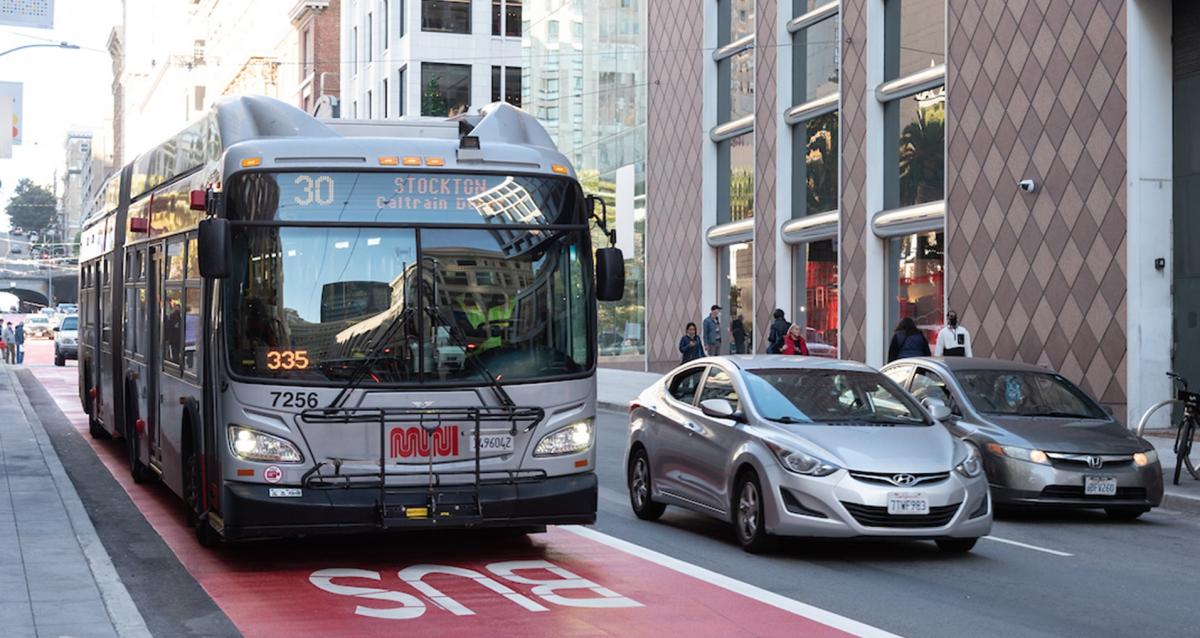
A photo of the 30 Stockton using the new, red transit lane on Stockton Street The SFMTA’s Muni Forward program is delivering transit reliability improvements that are transforming the Muni system and enhancing the customer experience. With 80 miles of upgrades since 2014 that often bring travel time savings of 20% or more, Muni Forward is making a big difference in how San Francisco moves. These upgrades, which can be seen in this Muni Forward Photo Map, draw from a “toolkit” of over 20 reliability and customer experience improvements, such as transit lanes that provided dedicated space for Muni vehicles to cut through traffic, transit bulbs that reduce delays at transit stops and traffic signals with transit priority that give the green light to transit vehicles as they approach the intersection, when possible.

The recently completed Van Ness Improvement Project thrust Muni Forward back into the spotlight with San Francisco’s first Bus Rapid Transit (BRT) corridor. While the Van Ness Improvement Project was a massive overhaul that required significantly more time and money to implement than the average Muni Forward project, we are seeing familiar benefits resulting from the transportation improvements. In just under two months, Muni riders on Van Ness are seeing a travel time savings of up to 35% northbound (up to nine minutes per trip) and 22% southbound on weekdays. After the first week of this drastically improved service, ridership on the 49 Van Ness-Mission increased by 13%.  

We’ve seen similar outcomes on past Muni Forward projects that share many features implemented on the BRT corridor. In addition to improved travel times and reliability, ridership has increased by 10% or more on many of the lines where Muni Forward improvements have been implemented, such as the 5R Fulton Rapid, 9R San Bruno Rapid and 38R Geary Rapid. And though ridership has decreased during the pandemic, it has returned fastest on many of the lines where we’ve made these improvements, such as the 22 Fillmore, which now has more riders than in 2019. 

Photo of people boarding a Muni light rail vehicle using the new transit bulb on Irving Street.

New transit bulb on Irving Street

Thanks to Muni Forward, San Francisco now has over 60 miles of dedicated transit lanes. Among these are the lanes that were installed as part of the Temporary Emergency Transit Lanes program. Made permanent in late 2021 and early 2022, these lanes have provided travel time savings of up to 31% for routes that carry 40% of current Muni customers, including the T Third, 1 California, 14 Mission, 14R Mission Rapid, 19 Polk, 27 Bryant, 28 19th Avenue, 38 Geary, 38R Geary Rapid, 43 Masonic and 44 O’Shaughnessy. 

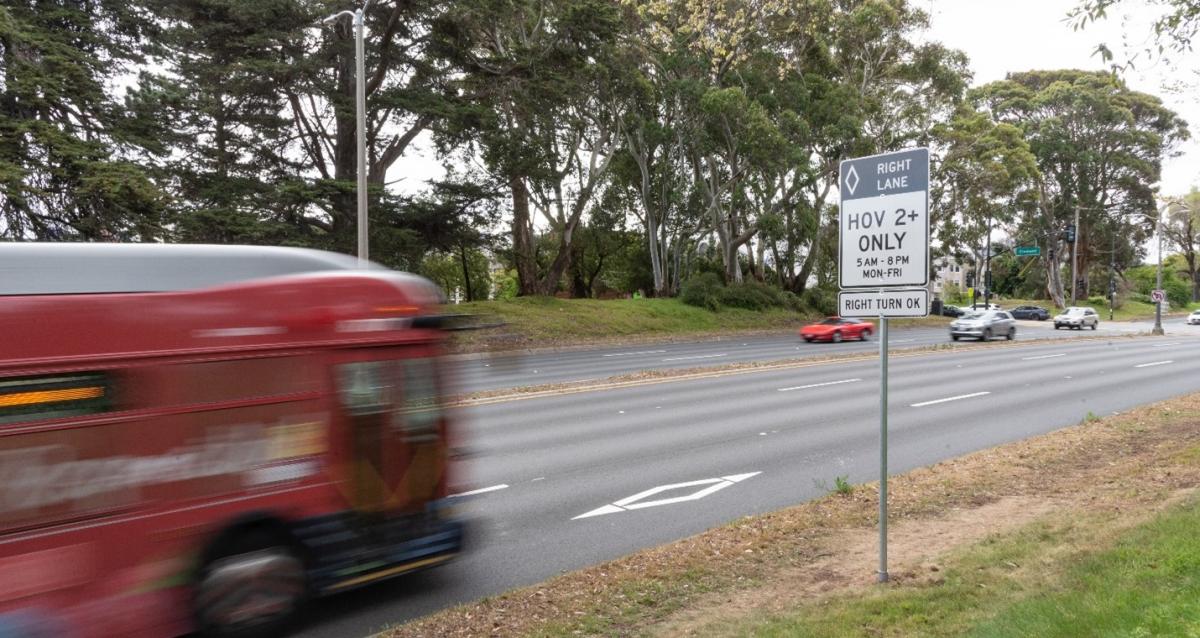
Photo of the new carpool lanes on Park Presidio Boulevard and the sign letting people know that the right lane is an HOV lane for two or more passengers.

New carpool lanes on Park Presidio Boulevard

Another notable recent Muni Forward project is the Park Presidio Lombard Temporary High-occupancy vehicle (HOV) lanes, which are the first urban arterial carpool lanes in the state. In partnership with Caltrans, this pilot project is already seeing travel time savings of up to 10%. 

Looking ahead, Muni Forward is not slowing down. Planning is underway for improvements on the 29 Sunset, and we’ve started construction on improvements to the 22 Fillmore, 28 19th Avenue and L Taraval. We’re also preparing for construction on improvements to the 14 Mission, 5 Fulton, 27 Bryant and 30 Stockton. Plans for transit delay hot spot improvements are also in the works, which will help improve Muni reliability at specific intersections where we have seen the most transit delay for Muni.  

Additionally, making improvements to Muni’s Metro service will be a major focus over the next few years. Upcoming Muni Forward projects will focus on surface-level improvements for the J Church, K Ingleside, M Ocean View, T Third and N Judah, which will complement the Muni Metro Modernization efforts that are already underway. 

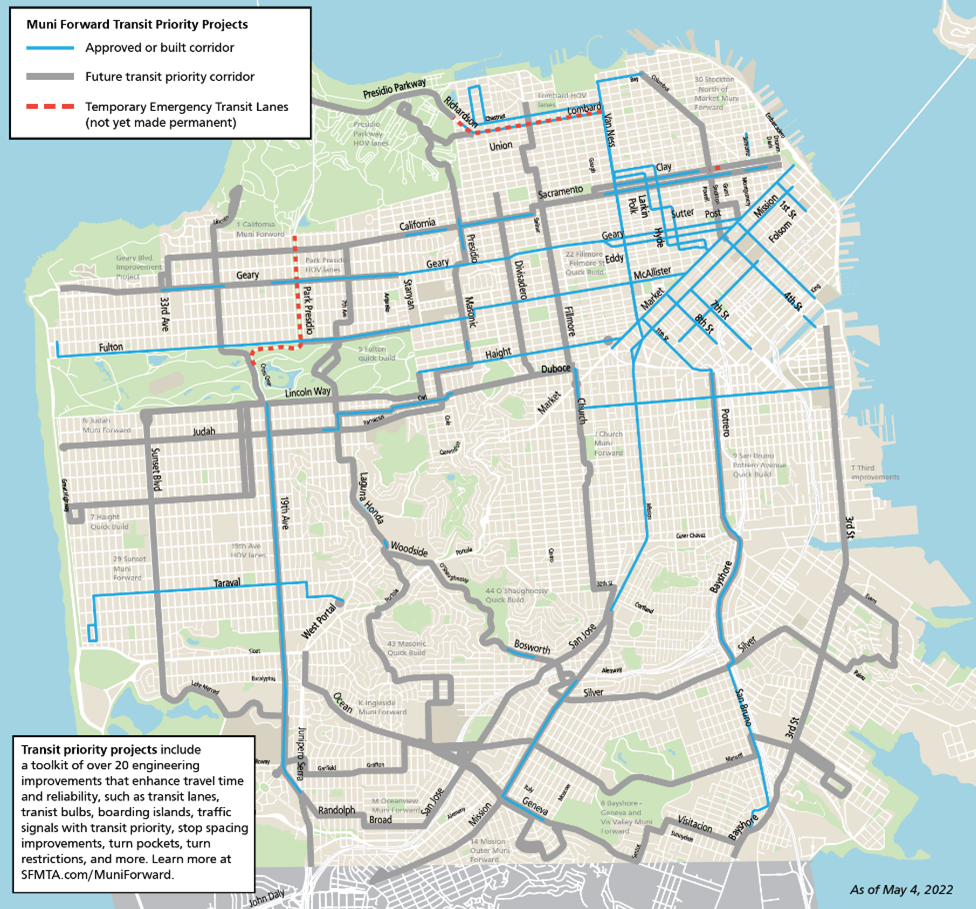
Map showing the Muni Forward transit priority projects across the city, including approved or built corridors, future transit priority corridors and temporary emergency transit lanes that are not yet made permanent.

Map of Muni Forward transit priority improvements

For a look at Muni Forward plans across the city, check out the map of Muni Forward transit priority improvements and see how Muni Forward is improving the system for customers, one project at a time.

Sign up to stay informed about future Muni Forward improvements.


Published June 03, 2022 at 12:38AM
https://ift.tt/noUG5ly

Wednesday, 30 March 2022

Women Pioneers at Muni: Adeline Svendsen and Muni’s First Newsletter

Women Pioneers at Muni: Adeline Svendsen and Muni’s First Newsletter
By Jeremy Menzies

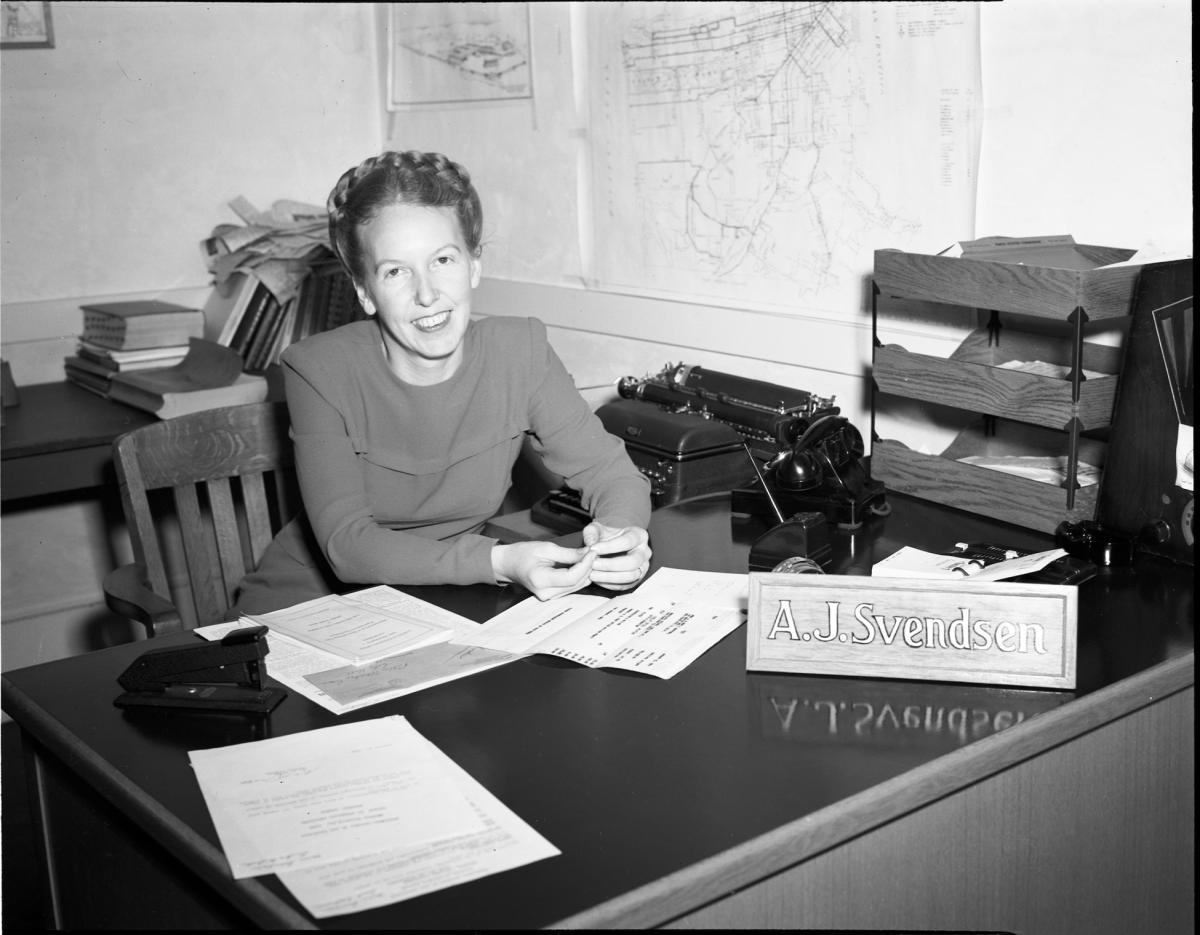
To close out Women’s History Month, here’s a look back at one woman whose work to bring Muni staff together in the late 1940s created a legacy that lives on to this day. Adeline “Addy” Svendsen was founding editor of Muni’s first internal newsletter, “Trolley Topics.”

Adeline Svendsen sits at her desk in the Geneva Carhouse office building in this 1949 shot.

Adeline Svendsen sits at her desk in the Geneva Carhouse office building in this 1949 shot.

Trolley Topics was a new venture when it started in February 1946. As Svendsen wrote in the first issue it was created, “to bring a little fun, a little news, and a lot of good will to all our fellow employees in the Railway.”

Just two years prior in 1944, Muni merged with the Market Street Railway Company, expanding the small municipal operation into the largest transit provider in the city with hundreds of employees, vehicles of every shape and size, and dozens of facilities scattered across town. The newsletter was meant to help unite the two workforces (which historically had been in competition with each other) and keep everyone on the same page about what was happening across the railway.

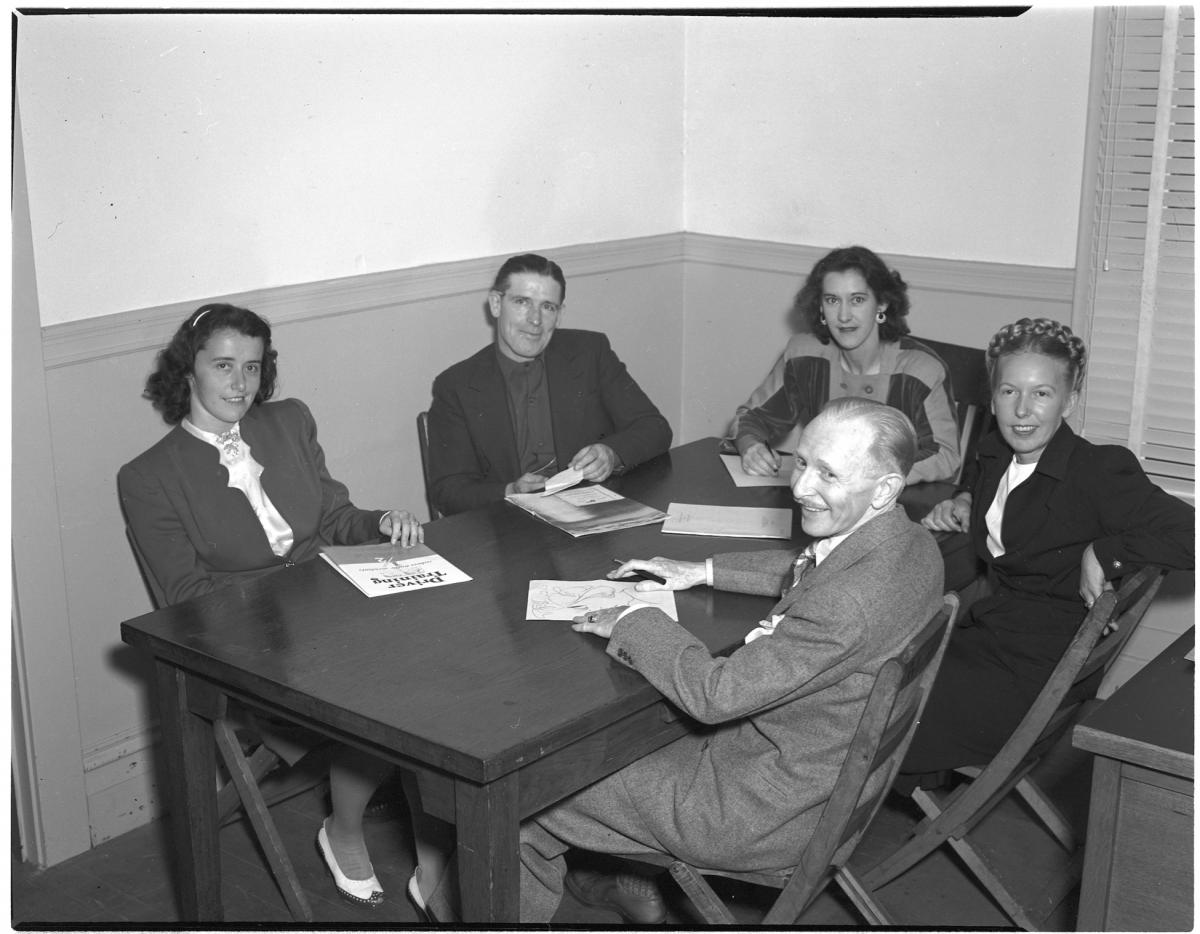
Group photo of Trolley Topics contributing staff in 1946. Clockwise from left: reporters Dolores Shea, Robert Fish, Maybelle Paetzel, editor Adeline Svendsen, and cartoonist Charles Reed.

Group photo of Trolley Topics contributing staff in 1946. Clockwise from left: reporters Dolores Shea, Robert Fish, Maybelle Paetzel, editor Adeline Svendsen, and cartoonist Charles Reed.

Through her perseverance and editorial savvy, Svendsen’s monthly quickly evolved from a bare-bones typewritten handout to a proper paper within just six-months of the first issue. Properly printed with an eye-catching front page, nicely laid out columns and photographs supplied mainly by the Muni Photography Department, Trolley Topics looked much like any professional magazine of the day.

Typically, each issue had sections for employee commendations, news from each division about staff activities, goofy transportation-centric cartoons, and articles about general railway announcements and programs. As the years progressed, the paper expanded its scope to include messages from the mayor, announcements about policy changes affecting city employees, more photos from staff events and awards, and occasional news from other departments.

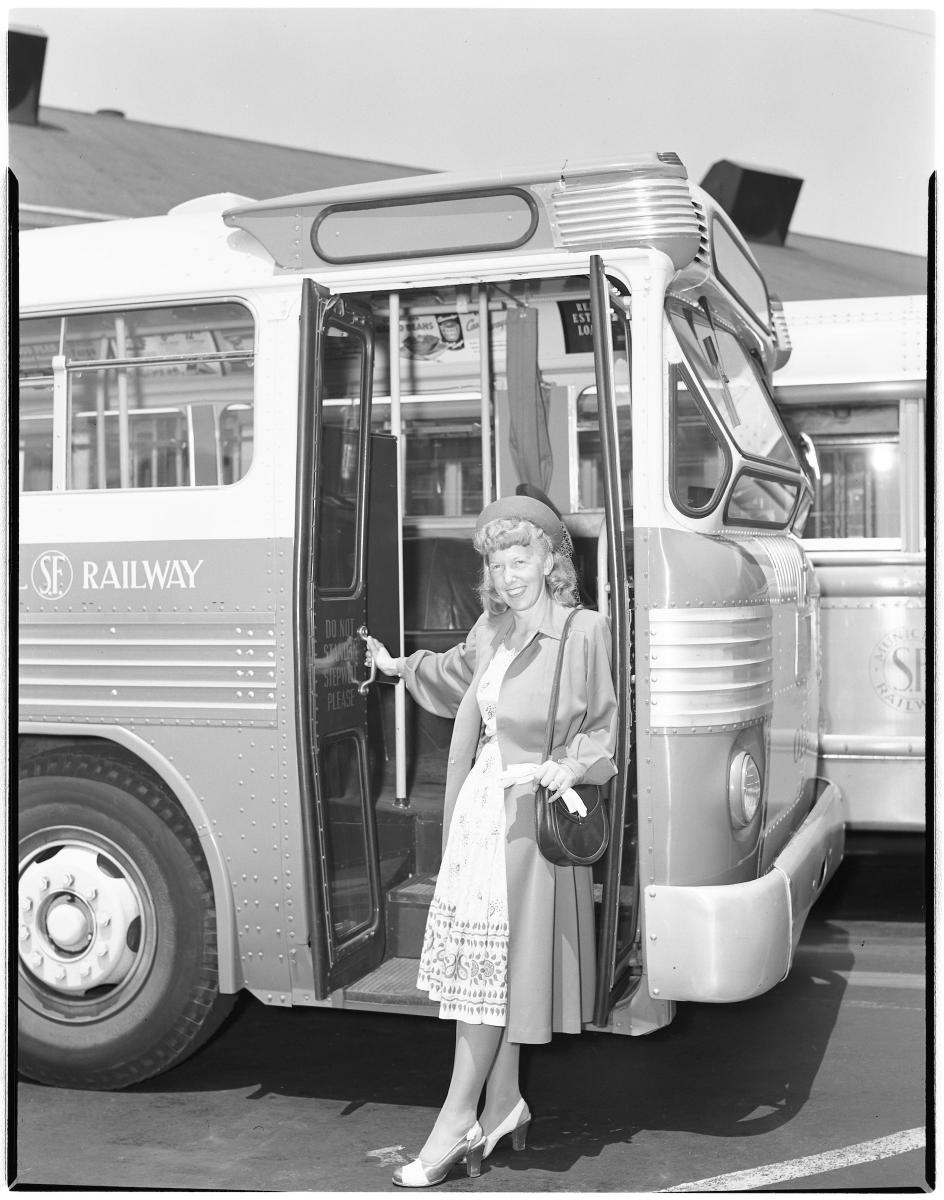
Svendsen poses with one of Muni’s newest buses in this 1947 photo taken at a bus garage once located on 24th and Utah streets.

Svendsen poses with one of Muni’s newest buses in this 1947 photo taken at a bus garage once located on 24th and Utah streets. 

Unfortunately, Adeline Svendsen left the Railway abruptly in 1952 and with her departure, the publication ceased production. Despite the short-lived run of the paper, Svendsen’s nearly seven-year project left an important mark on Muni.

Recognizing the importance of Svendsen’s original Trolley Topics, the newsletter was revived using the same name in 1973. Much like its predecessor, the 1970s Trolley Topics covered staff awards and events but also focused on major programs to improve the system. In mid-1980, the second run of the paper ceased production due to budget problems, with no replacement until the 1990s.

Not only did Adeline Svendsen’s Trolley Topics bring staff together and provide much needed information at the time it was published, her work offers inspiration for our ever expanding efforts to connect our nearly 6,000 colleagues today. Additionally, the stories and photos published in both the original and the revived Trolley Topics give us an invaluable glimpse into the operations and culture of Muni during those times.


Published March 30, 2022 at 11:11PM
https://ift.tt/rvyFWNU

Monday, 7 March 2022

New Customer Information System Signs Coming to a Transit Shelter Near You!

New Customer Information System Signs Coming to a Transit Shelter Near You!
By Kharima Mohamed

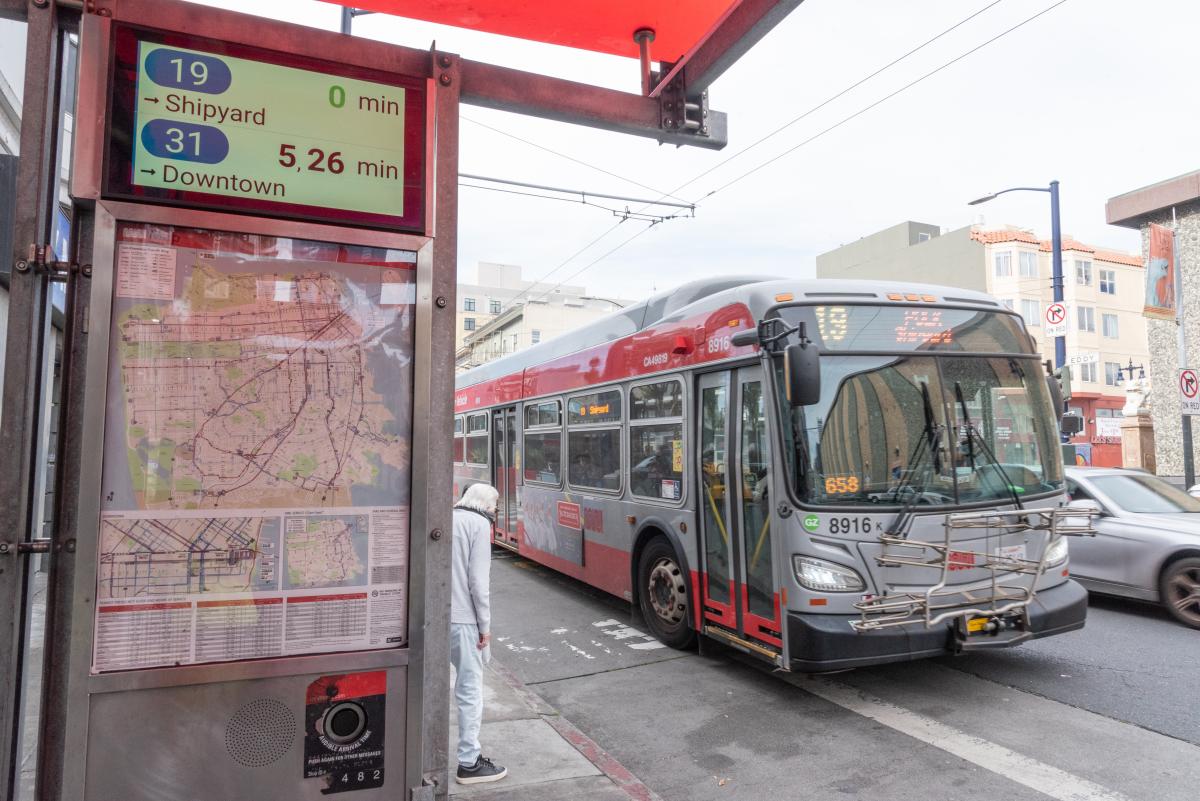
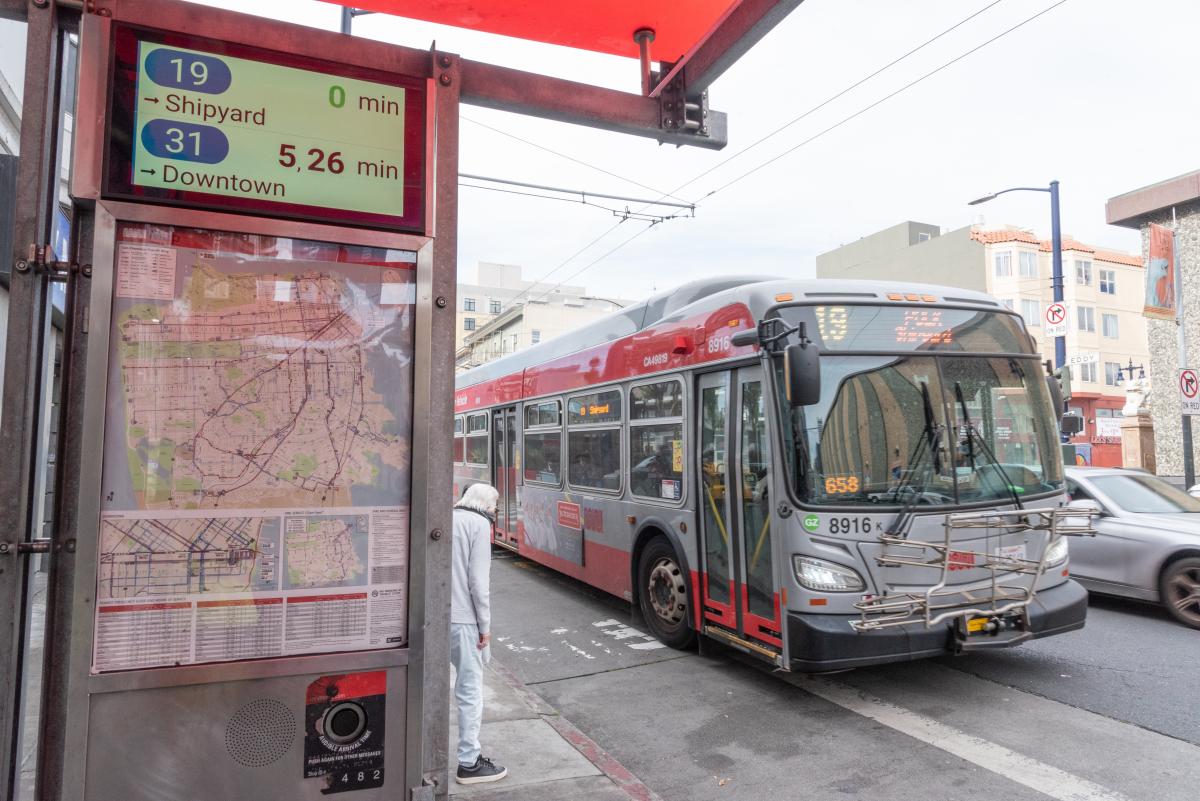
New customer information sign on a bus shelter as the 19 Polk approaches

As part of the Next Generation Customer Information System project, over 700 new Liquid Crystal Display (LCD) signs will display real-time information at Muni transit shelters. Approximately one-third of these signs will be double-sided to provide additional visibility at the highest-ridership stops and major transfer points. This week we installed a single-sided prototype at Eddy and Larkin streets. Serving the Tenderloin, an Equity Neighborhood, this sign will feature real-time predictions for the 19 Polk and 31 Balboa routes. The primary purpose for installing this prototype is to conduct in-field hardware testing, especially with rain, wind and colder temperatures.   

We know there is an urgent need for more effective signage and are excited to roll out the new customer information system later this year.  The new LCD signs will eventually replace all existing NextBus Light Emitting Diode (LED) signs, many of which have been in service for two decades and have reached the end of their lives and are no longer manufactured. 

An extensive public outreach effort helped provide the new display sign’s overall design and other Customer Information System elements.   

Key features of the new signs include: 

  • 24-inch LCD screens with vandal-resistant tempered glass 

  • Americans with Disabilities Act (ADA) compliant text-to-speech capability 

  • Larger and clearer text 

  • Letters and characters in multiple languages 

We will evaluate how the prototype signs withstands the real-world environment and determine if any adjustments are needed. Public feedback will be reviewed as we fine-tune how information will be displayed.  

The public is welcome to provide feedback on the look and feel of the sign at Eddy and Larkin streets. These signs will replace existing NextBus signs starting  in Spring 2022. Check out the new sign and let us know what you think. Please provide your feedback by emailing us at CIS@sfmta.com. 


Published March 08, 2022 at 12:32AM
https://ift.tt/J9GMOZ0

Friday, 25 February 2022

Improved Muni Transit Information

Improved Muni Transit Information
By Kharima Mohamed

As part of the larger effort to provide improved transit information to Muni riders, we have significantly improved the SFMTA.com stop webpages with a focus on improved accessibility. 

Each of the over six thousand stops throughout the Muni Service Network has a unique webpage that displays multiple features. These improved features on the stop webpage help to improve the customer experience for riders to easily get all the information they need to get where they need to be.  

Features include: 

  • A mobile-first designed web app view for succinct on-the-go real-time vehicle predictions at the top of the page. 

  • Detailed route information served at each location. 

  • Alerts specific to both that specific stop and all of the routes served. 

  • A real-time vehicle-tracking map and a vicinity map for each stop. 

  • Nearby stops to provide stop options if an alternative is needed. 

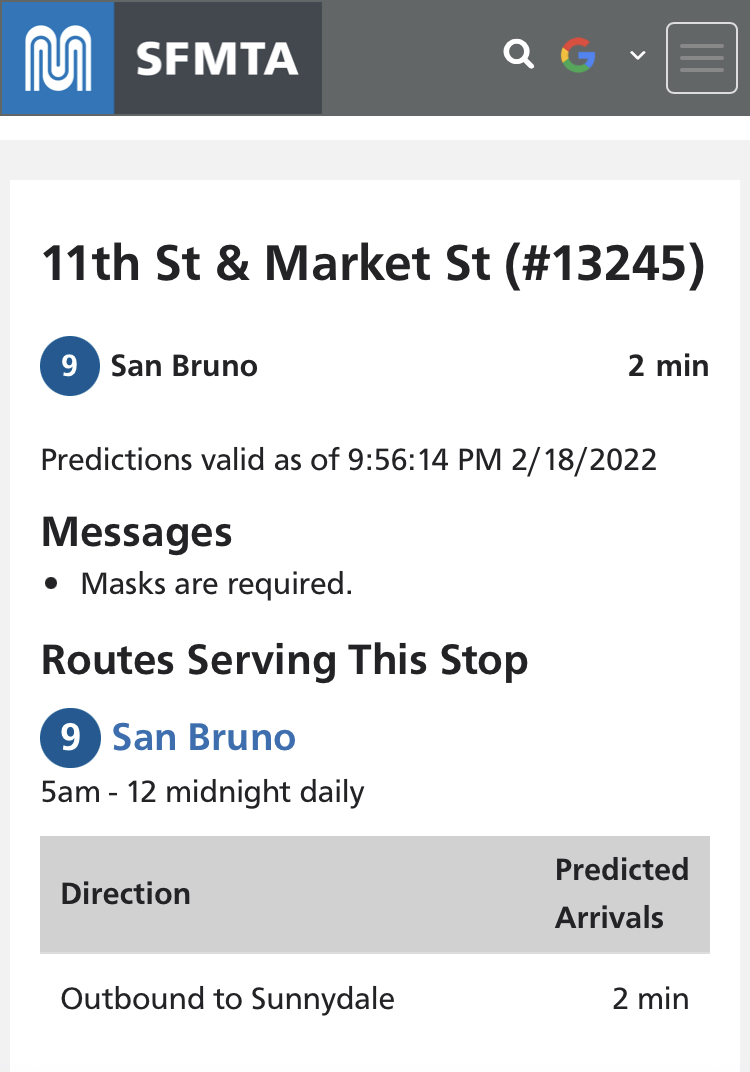
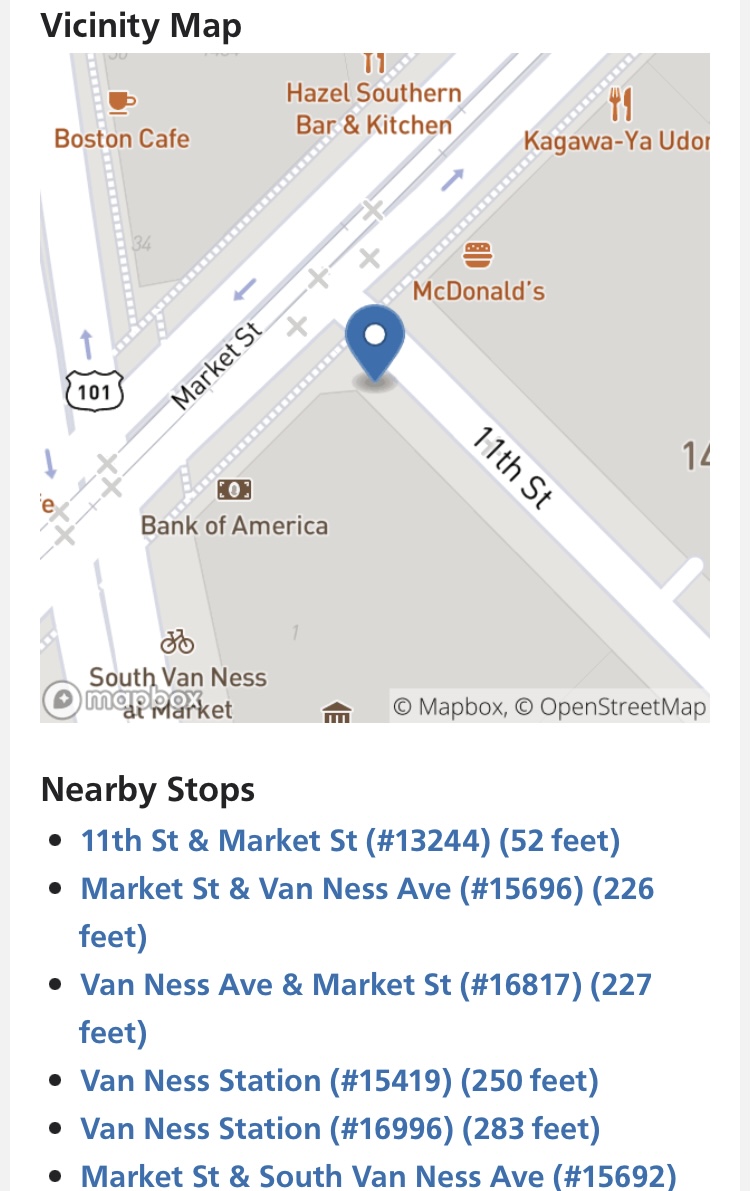
To visit the new stop page of your choice, simply use its five digit stop ID. You can find the five digit stop ID at the top of the transit shelter. For example, the stop ID at 11th St and Market is 13425, the short URL is SFMTA.com/13425. 

Example image of a stop page using the transit shelter's five digit stop ID

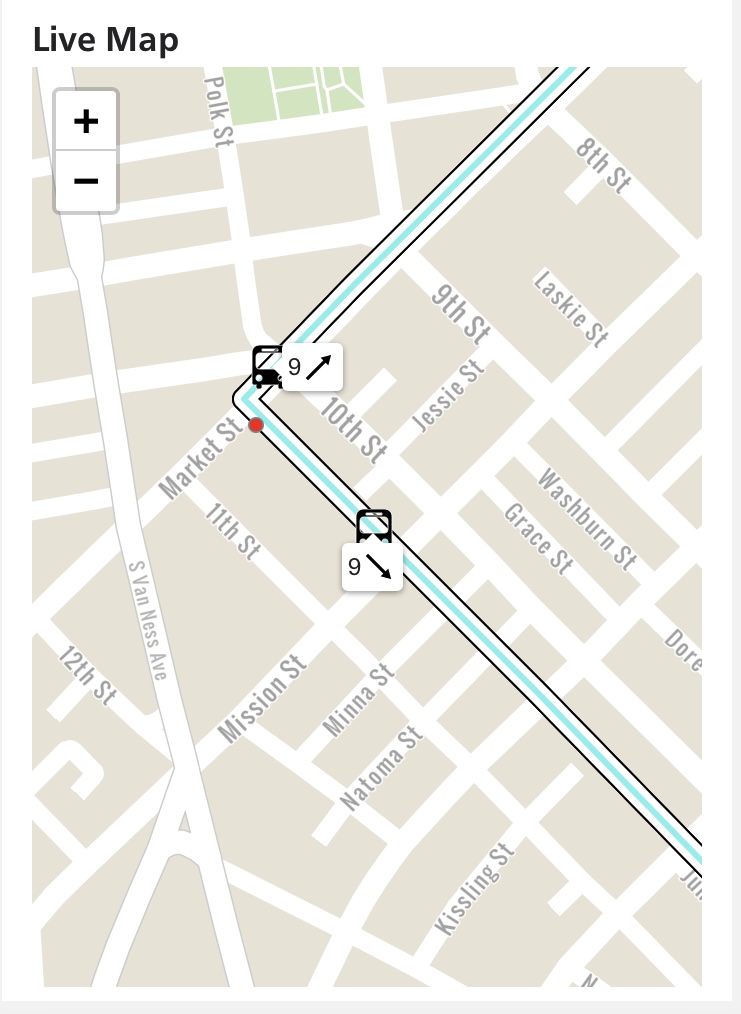
Included in this release are enhanced accessibility features that allow screen readers to not only read the details of the stop’s service, but also display when a vehicle approaches to ensure that nobody misses their ride or gets on the wrong vehicle. 

Live map image showing the real time approach of a vehicle's arrival to ensure that nobody misses their ride or gets on the wrong vehicle.

Part of this update is an all-purpose “Find a Stop” page that supports geolocation, lookup stops or map interface to find any stop throughout the Muni Service Network. With a location services enabled on a customer’s smartphone this webpage returns to the nearest stops. The webpage also includes a lookup for address, intersection, and places of interest as well as a map interface for riders that do not wish to use geolocation. All the features on the stop webpage presents riders with multiple options to choose from to plan their Muni ride and continue their trip journey. 

Image showing nearby stops using geolocation services.

These enhancements are part of the Next Generation Customer Information System Project. Future improvements will soon include an improved multimodal trip planner, more accurate predictions and enhanced accessibility information for each stop that will enable improved accessible trip planning. 

As AT&T’s 3G decommissioning impacts NextMuni electronic displays*, the SFMTA.com stop webpages and third party transit information applications are easy-to-use options to get vehicle predictions and other much needed transit information so that you can plan your trip efficiently. *We anticipate a gradual wind down of the AT&T 3G service over the next few weeks. Our NextBus signs are currently operational, but this will likely change in phases.


Published February 25, 2022 at 10:51PM
https://ift.tt/TnaQMxg

Wednesday, 9 February 2022

POTUS Appoints SFMTA Planner to U.S. Access Board

POTUS Appoints SFMTA Planner to U.S. Access Board
By Stephen Chun

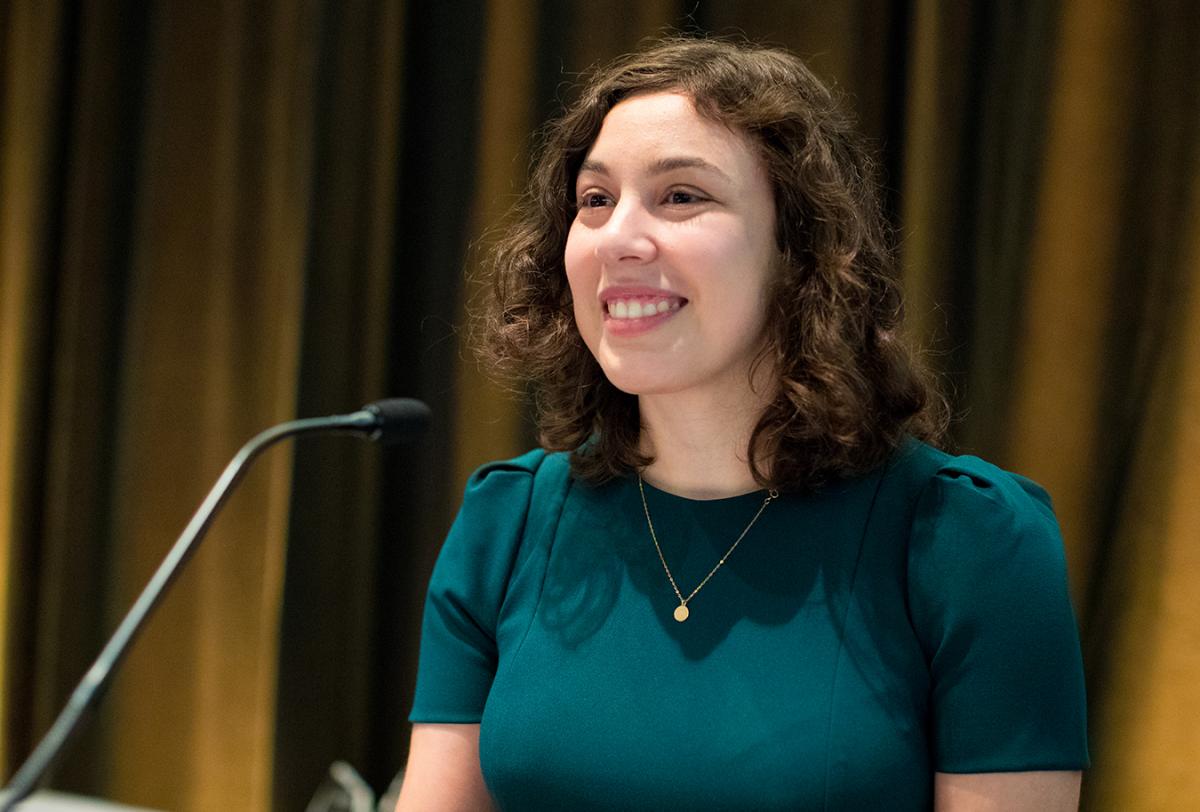
Maddy Ruvolo, Streets Accessibility Planner in the Taxi, Access and Mobility (TAMS) Division

A big shout out to Maddy Ruvolo, Streets Accessibility Planner in the Taxi, Access and Mobility (TAMS) Division! 

On Monday, the President of the United States announced his intent to appoint our very own Maddy Ruvolo to serve on the U.S. Access Board as an Architectural and Transportation Barriers Compliance Access Board Member. The U.S. Access Board is an independent federal agency that promotes equality for people with disabilities through leadership in accessible design and the development of accessibility guidelines and standards. This role is a very important, critical and prestigious position and it is no secret that Maddy Ruvolo is the perfect individual to serve on the U.S. Access Board and represent San Francisco.  

Ruvolo has been widely recognized for her commitment in the accessibility of transportation for persons with disabilities. At the SFMTA, she has been instrumental in the agency’s efforts to ensure the accessibility of emerging and active mobility modes in scooter and bicycle programs, and Transporation Network Companies (TNC).   

Ruvolo also played a key role in the implementation of accessibility guidelines for Shared Spaces, where business owners are required to comply with the Americans with Disabilities Act (ADA) for their parklets and/or outdoor (dining) spaces. Her work also involves conducting engaging and effective public outreach, including soliciting meaningful input from people with disabilities and older adults on pivotal decisions about mobility in Golden Gate Park. 

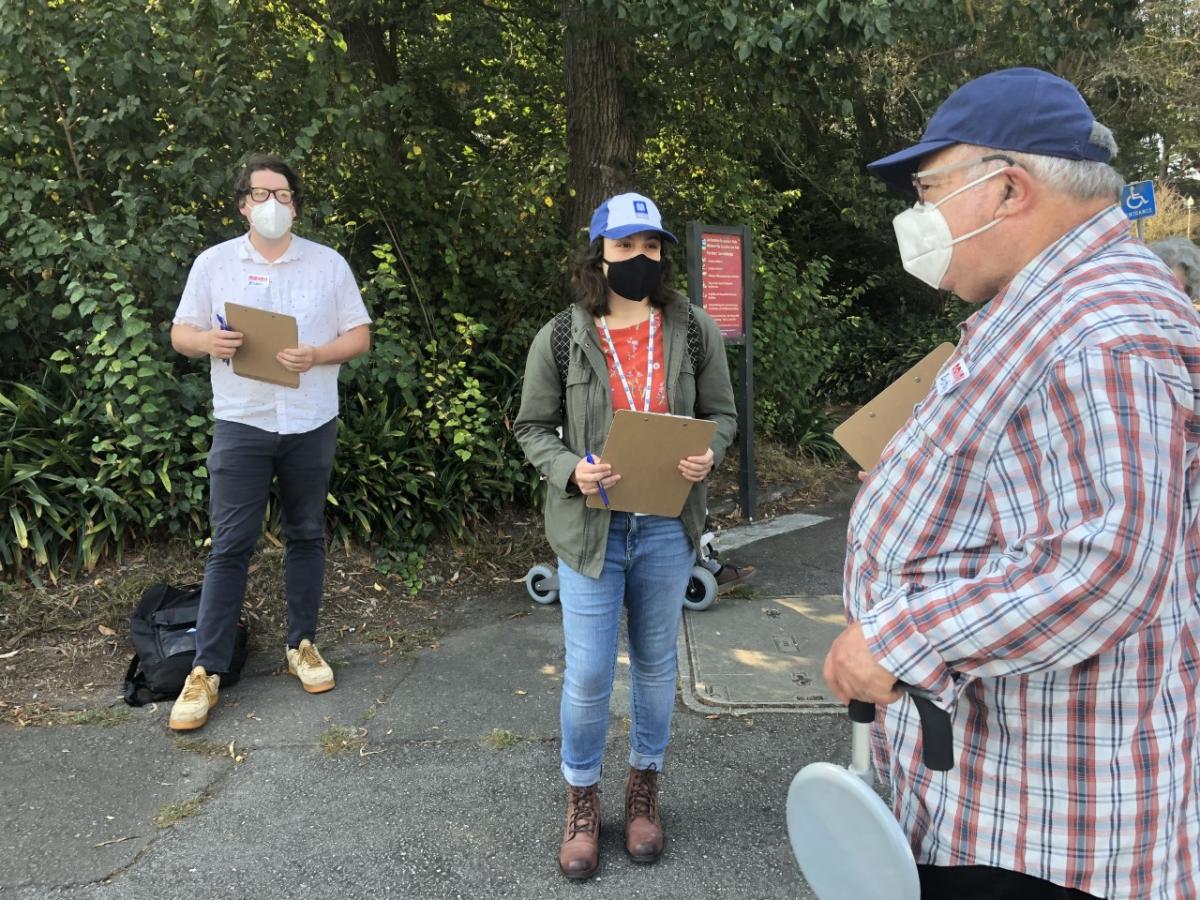
Maddy Ruvolo leading an Accessibility Tour for the Golden Gate Park Access & Safety Program in 2021

Ruvolo will be staunchly representing San Francisco and advocating for persons with disabilities in the transportation sector.  She has a master's degree in Urban and Regional Planning from UCLA, a Bachelor of Arts in American Studies from Scripps College, where she graduated summa cum laude, and she has worked for the UCLA Institute of Transportation Studies, the Los Angeles Department of Transportation, and the Oakland Department of Transportation. Ruvolo has received many accolades for her past accomplishments such as the Dwight David Eisenhower Transportation Fellowship and Myra L. Frank Memorial Graduate Scholarship. And of course, we recognize her experience here at the SFMTA as a San Francisco Fellow in Livable Streets, an analyst on the Performance Team, and now as a transportation accessibility planning expert.   

Please join us in congratulating Maddy Ruvolo! Many across the country will now benefit from her commitment to equal access and direct engagement. For more information, please visit U.S. Access Board or President Biden Announces Key Appointees. 


Published February 09, 2022 at 10:59PM
https://ift.tt/Mm45sfr

Tuesday, 25 January 2022

Bus Testing on the New Van Ness BRT Corridor a Success

Bus Testing on the New Van Ness BRT Corridor a Success
By Nehama Rogozen

Muni and Golden Gate Transit staff recently conducted important bus operations testing that is an important step towards the Van Ness Bus Rapid Transit (BRT) corridor opening this spring. This testing included emergency turns and maneuvers, repositioning buses, verifying signals are working, clearances between passing buses and safe turns while bike racks are deployed.  

The training also included several staff. Traffic engineers made sure traffic and transit signals were working and reviewed street markings. Transportation planners coordinated closely with operations, training, engineering and construction staff to make necessary adjustments. Outreach staff and ambassadors answered questions and made sure customers knew testing was taking place. Field managers and operators provided suggestions for improvements based on experience.  

Since most Muni operators are new to operating a bus on a BRT corridor, operators will be trained on the new system over the coming weeks. To ensure that their training is as robust as possible, trainers from Muni and Golden Gate Transit participated in the testing activities to see what additional skills operators will need to learn.  

The Van Ness Improvement Project is bringing San Francisco’s first BRT corridor that will improve transit service and address traffic congestion on Van Ness Avenue, in addition to providing extensive utility upgrades, civic improvements and safety enhancements.  

We know that this project has been a long ride for the community, and we are eagerly preparing for several opening activities to celebrate the new BRT corridor. These will include a ribbon-cutting, lighting of the public light sculpture, family-friendly activities and ways to support Van Ness businesses.  

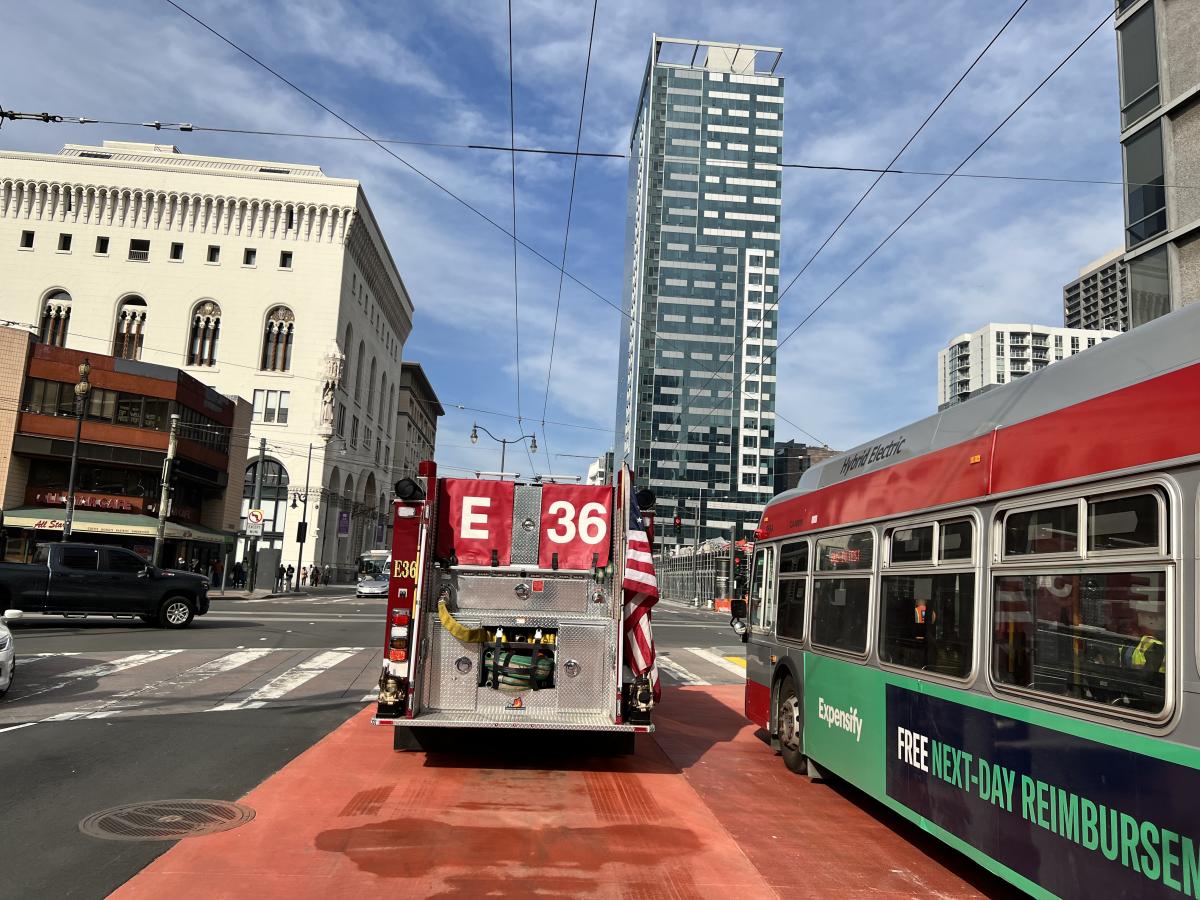
During testing, our ambassadors heard lots of positive feedback from people walking. A parent remarked that it would be easier to take her daughter to school on the bus, while someone else noted that an ambulance successfully used the red lanes to cut through traffic, saying, “Wow! I didn’t think about it until now, but I see how this is not only good for those of us riding the bus, but also really good for emergency services!” Someone else commented that the BRT system, despite delays, “was well worth the wait.” 

In the meantime, there remain a few more specific turns that need to be tested, so if you see buses in the median, please do not attempt to board them. Sidewalk signage is directing customers to the correct stops that are currently boarding from the sidewalk curb. We look forward to welcoming you aboard buses in the BRT corridor in just a couple of months.  

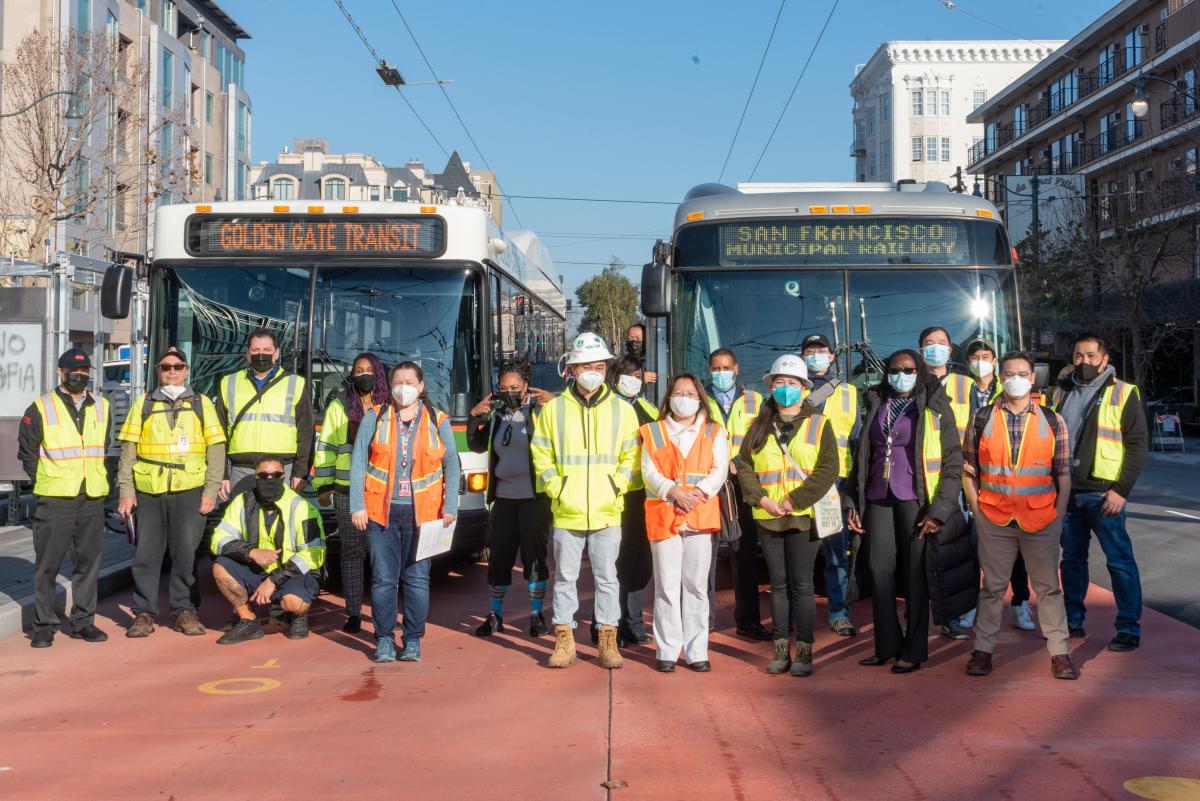
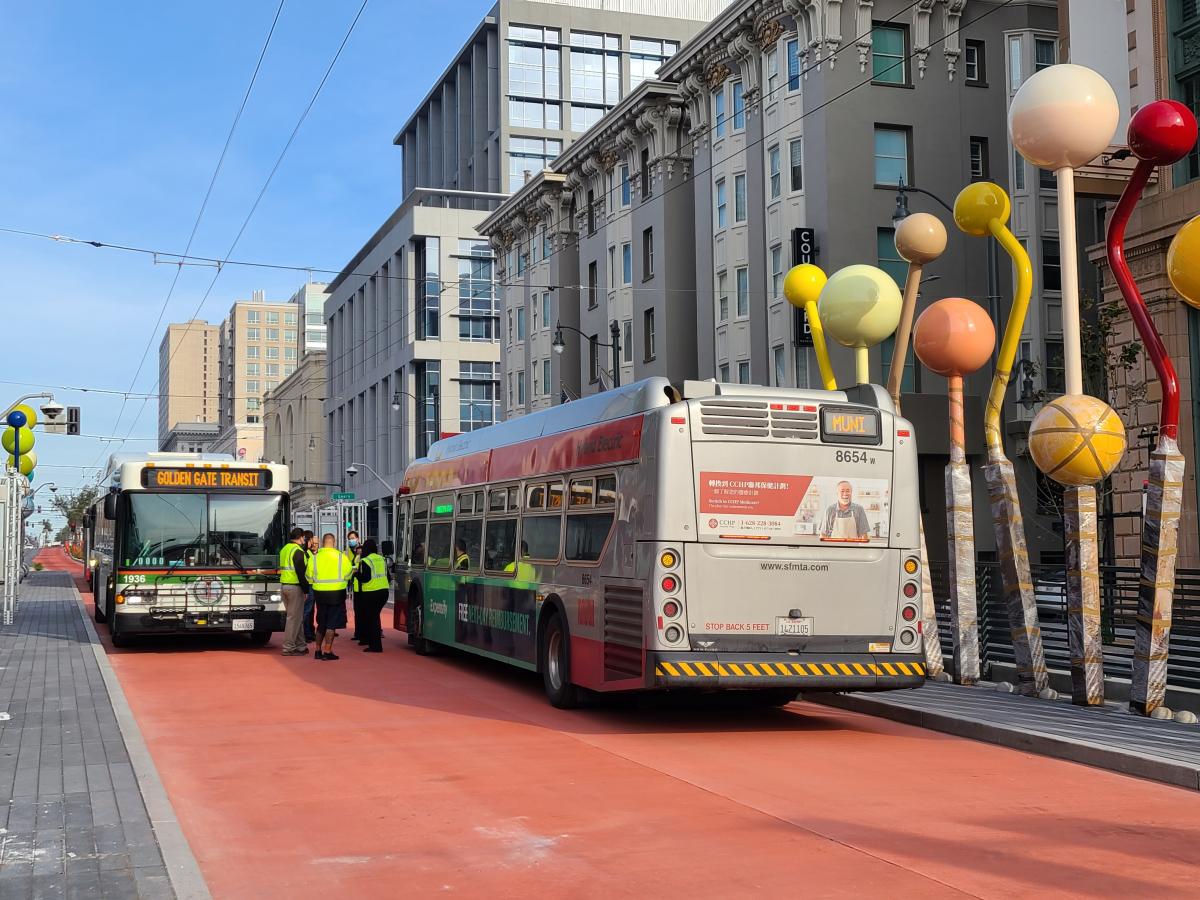
 Approximately twenty folks wearing yellow and orange safety vests pose in front of a Golden Gate Transit bus and a Muni bus on the red lanes. Van Ness buildings are visible in the background.

Staff from Muni and Golden Gate Transit in front of revenue vehicles before testing begins. 

A Golden Gate Transit bus and a Muni bus are parked next to each other in a red transit lane, with staff standing between the two buses. On each side of the platform, public artwork is visible. The public artwork is composed of tall balls in various colors attached to poles, curving in various directions. In the background are mostly housing complexes.

Staff measure passing distances between a Golden Gate Transit bus and a Muni bus at the Geary-O'Farrell BRT stop, where public artwork is being installed. 

The back of a firetruck is shown passing the side of a Muni bus at the intersection of Van Ness and Market.

A fire truck uses the red lanes to bypass traffic on Van Ness. 


Published January 25, 2022 at 11:05PM
https://ift.tt/3tYnE5D

Friday, 7 January 2022

Omicron Surge Impact on Muni Routes and Schedules

Omicron Surge Impact on Muni Routes and Schedules
By Julie Kirschbaum

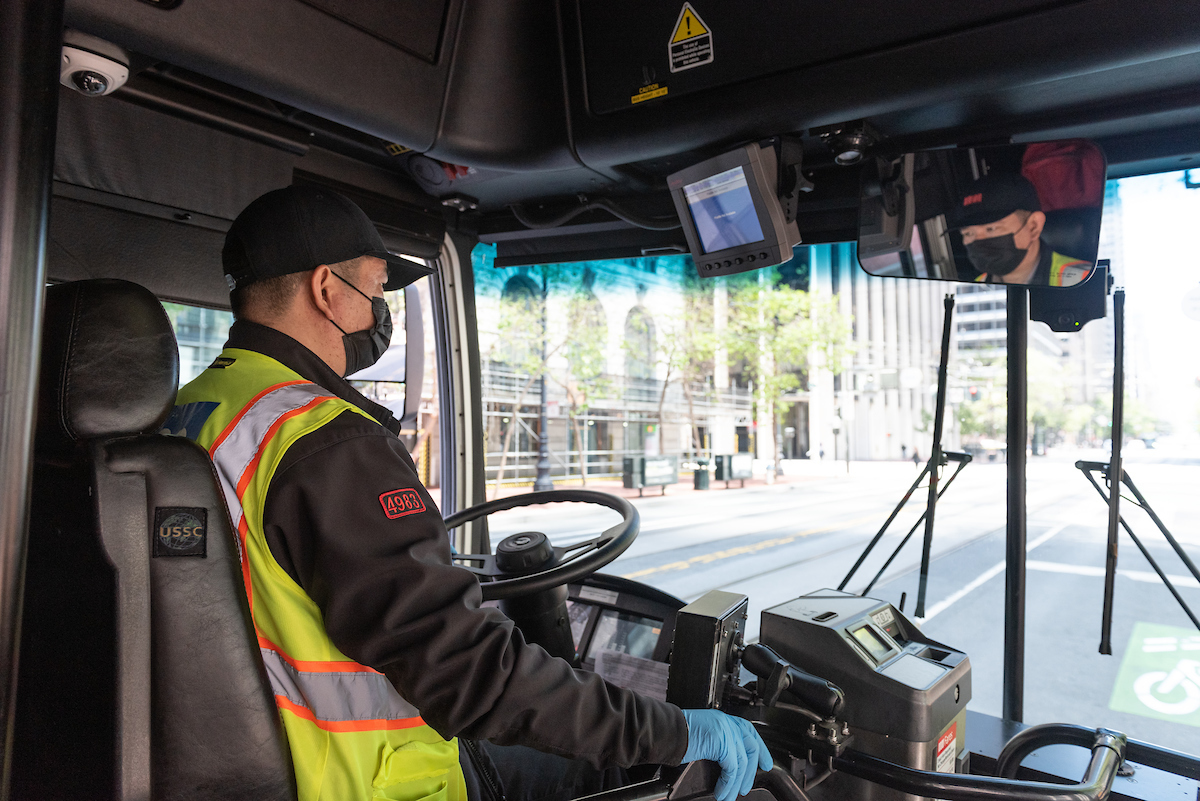
Photo of a bus operator wearing a mask

As has been reported widely in the media, the highly contagious Omicron variant has led to rapid and unprecedented spread of the COVID-19 virus in San Francisco. More than 100 SFMTA staff have contracted COVID since late last month. Combined with pre-existing staffing shortages, this has led to an increase in missed Muni service. We’re also experiencing staffing impacts in other job classifications, including mechanics, car cleaners and transit supervisors. 

Currently, we are missing up to 15% of scheduled Muni service, which means that riders may need to wait longer than usual for their bus or train. Our hope is that this will be the extent of our impacts. However, the situation is fluid, and we are monitoring staffing levels on a daily basis.

As part of our contingency planning, we are preparing for what might happen if our overall staffing levels drop significantly or if a small, but vital group—such as our Transit Management Center or Power Control Center— is significantly impacted. Either of these situations could leave us with no choice but to make additional Muni service reductions such as cancelling routes or introducing bus substitutions for rail service.

We are doing our best to avoid this situation by communicating proactively with staff about masking and staying home if they have any symptoms and keeping some staff working vital functions at remote locations to limit exposure. We are grateful that nearly 100% of the SFMTA workforce is vaccinated, and we are encouraging boosters as an effective precaution. We are also doing hard work behind the scenes to prepare signage, operator instructions, and all the other materials we would need to implement changes as smoothly as possible — in the case these become necessary.

For the latest information on service changes, please visit our Core Service webpage. You can also find our latest updates by subscribing to Muni alerts or visiting our Twitter feed.


Published January 07, 2022 at 11:10PM
https://ift.tt/3G9cRbZ

Monday, 20 December 2021

Safe Driver Awards 2021

Safe Driver Awards 2021
By Pamela Johnson

Navigating any type of vehicle, no matter the size, through miles of hilly San Francisco terrain and sharing the roadway with others is no easy feat. Add Ubers, private and commercial vehicles, taxis, bicycles, scooters and pedestrians into the mix and the challenge escalates quickly.  

But what is even more truly remarkable is that we have 282 Muni transit operators who've managed this safe driving record with no avoidable safety incidents year after year for more than 15 years. Some for several decades!  

This year, the Muni operators named as honorees for the annual Safe Driver Award Program have met that challenge to be called a Safe Driver. Additionally, 20 new operators were welcomed to this elite club of which three have at least 35 years of safe driving: 

  • Oliverio Valle, Cable Car Division, 47 Years Safe Driving 

  • Lonnie Moore Jr, Green Division, 44 Years Safe Driving 

  • Jason Lao, Green Division, 37 Years Safe Driving 

Typically, we hold a banquet dinner to formally honor these operators who have proven to be the best of the best and the safest of the safe, but as you know, like the previous year, 2020 was anything but typical. While we cannot celebrate in person again this year, the accomplishment does not go unnoticed. A special recognition will take place during the Tuesday, January 18th Board of Director’s meeting at 1 pm. Director of Transportation, Jeff Tumlin and Transit Workers Union Local 250A will be presenting the awards. The meeting will be streamed live through SFGovTV.  

What are the criteria for being a Safe Driver? 

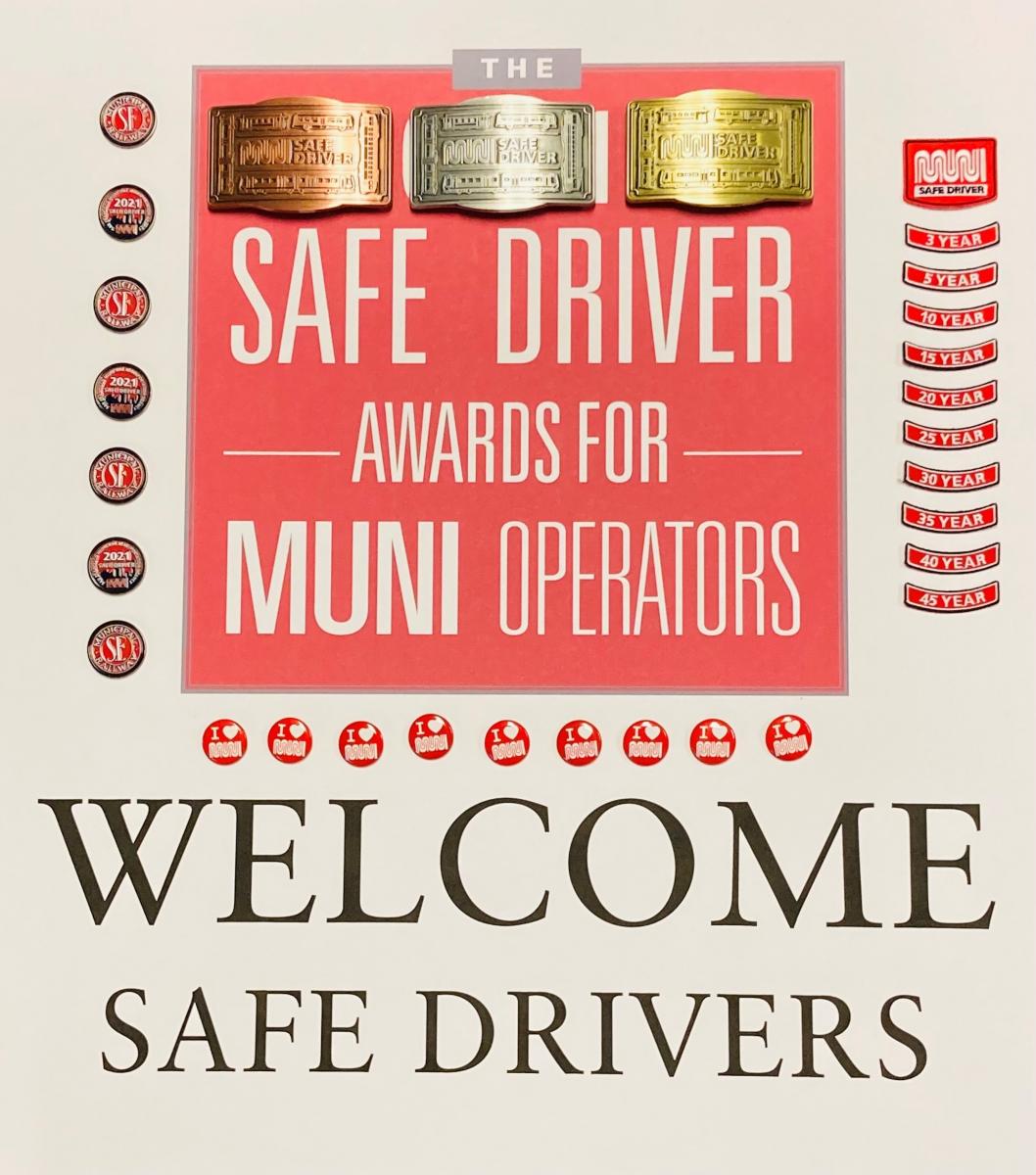
Simply put, operators who have driven a minimum of 1,952 qualifying hours* each fiscal year with no avoidable safety incidents on record. Safe drivers are also recognized with belt buckles, patches and certificates at various points. 

Qualifying hours are defined as the sum of actual hours spent operating a transit vehicle (platform hours, including both regular and overtime) plus hours of vacation taken and holiday hours granted (including floating days) within the qualifying period. Due to COVID-19, qualifying hours for FY2021 also include COVID Sick and Furlough. The qualifying period of the fiscal year is July 1, 2020, to June 30, 2021. 

It goes without saying that receiving a Safe Drivers Award is a career milestone achievement for transit drivers everywhere. Muni operators who exemplify the term "safe driver" have clearly demonstrated excellence in service and have furthered the SFMTA's ongoing commitment being a transit first city. 

This year the 282 transit operators being honored with the Safe Driver distinction have at least 15 years of Safe Driving experience and will receive a commemorative 2021 token, belt buckles, patches to wear on their uniform shirt or jacket, and a certificate.  

We thank all our drivers for their exemplary work moving San Francisco regardless of the number of years involved. The following list honors those with 15 years or more of safe driving who have earned the coveted distinction of being called a Safe Driver.​  

Safe Driver Awards 2021 token, belt buckles and patches


Published December 21, 2021 at 12:11AM
https://ift.tt/3J30mka

Floating Button

Button